
Recently, in a session with my psychotherapist, I realized something important about my son—and about something we got wrong in parenting a PDA child.
About two years ago, Arthur suddenly stopped using his iPads. It surprised me—he had loved them so deeply. Whenever I offered them, he would push my hand away, gesture for me to take them out of sight. I didn’t understand why.
He kept using his phone for his AAC app, but gradually began using my phone more and more—until, eventually, it didn’t feel like mine anymore. I had to ask his permission to use it. I was exhausted, dysregulated, and felt controlled.
When I shared this with my therapist, she asked a simple question:
“Did anything change around the time Arthur stopped using his iPads?”
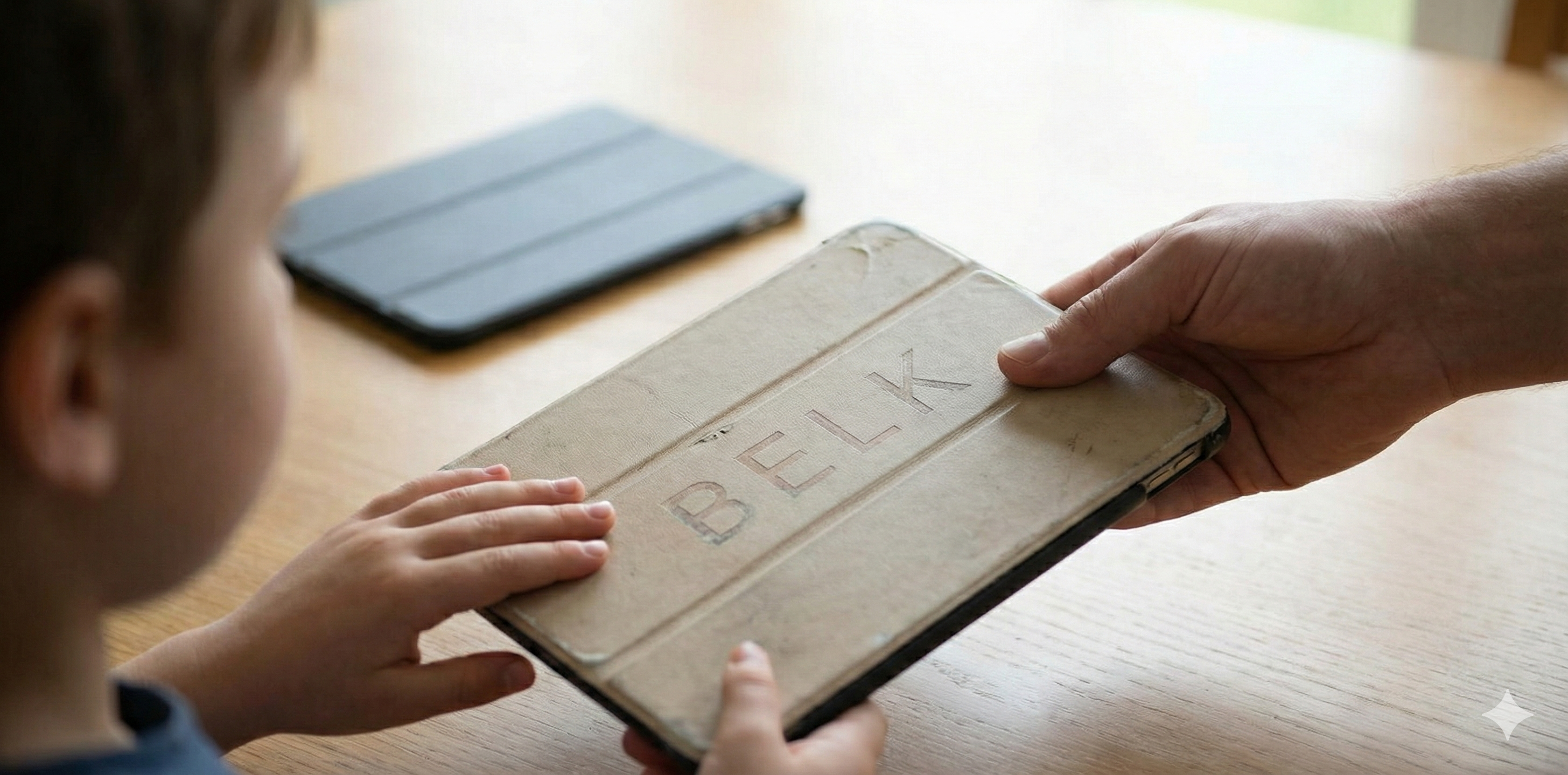
I remembered we had replaced his iPad covers—they were old, torn, shabby.
“Was Arthur part of that decision?” she asked.
The answer was no. And suddenly, I felt the weight of overlooking something that mattered deeply to him. We had informed him, but not consulted him.
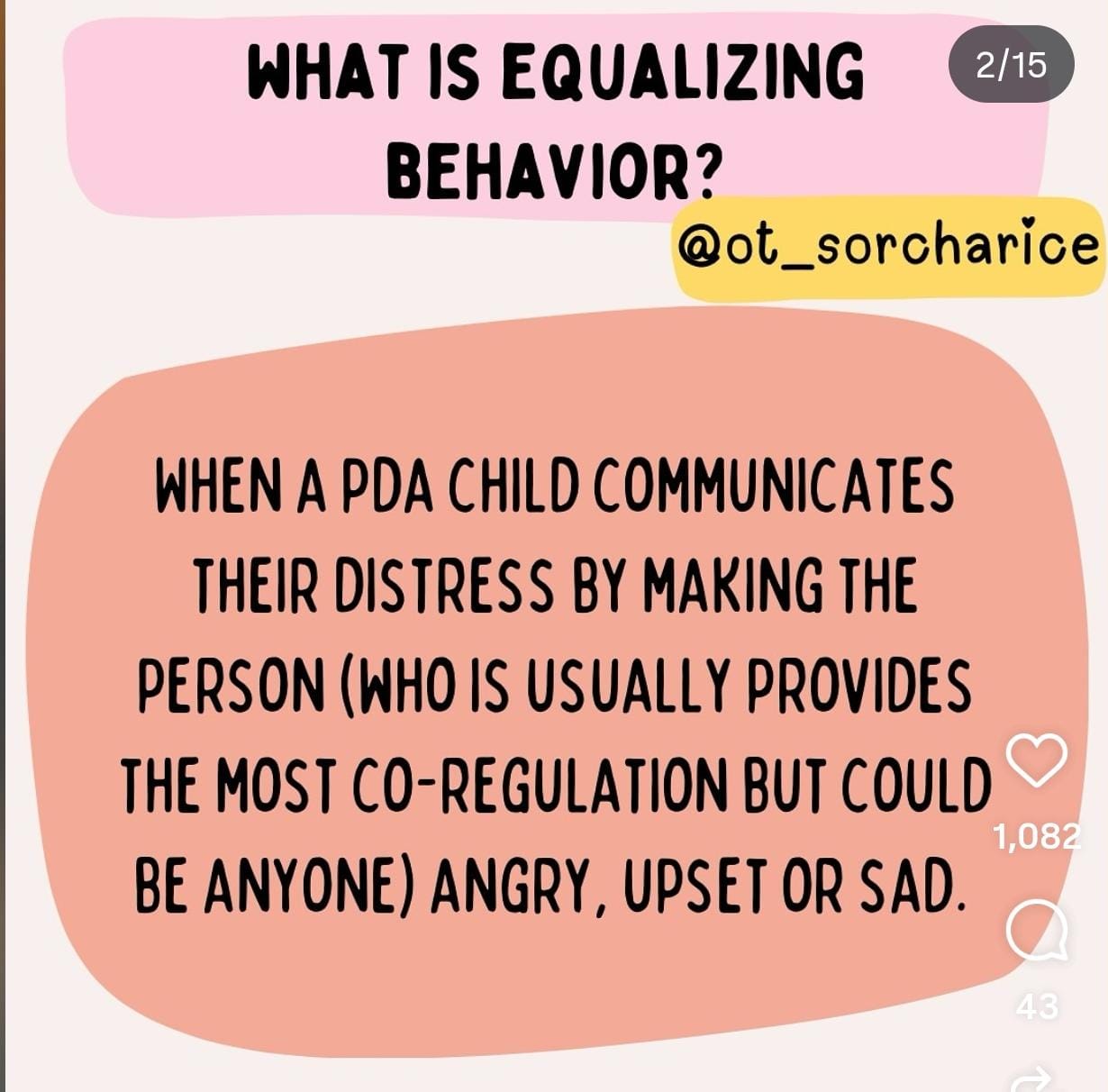
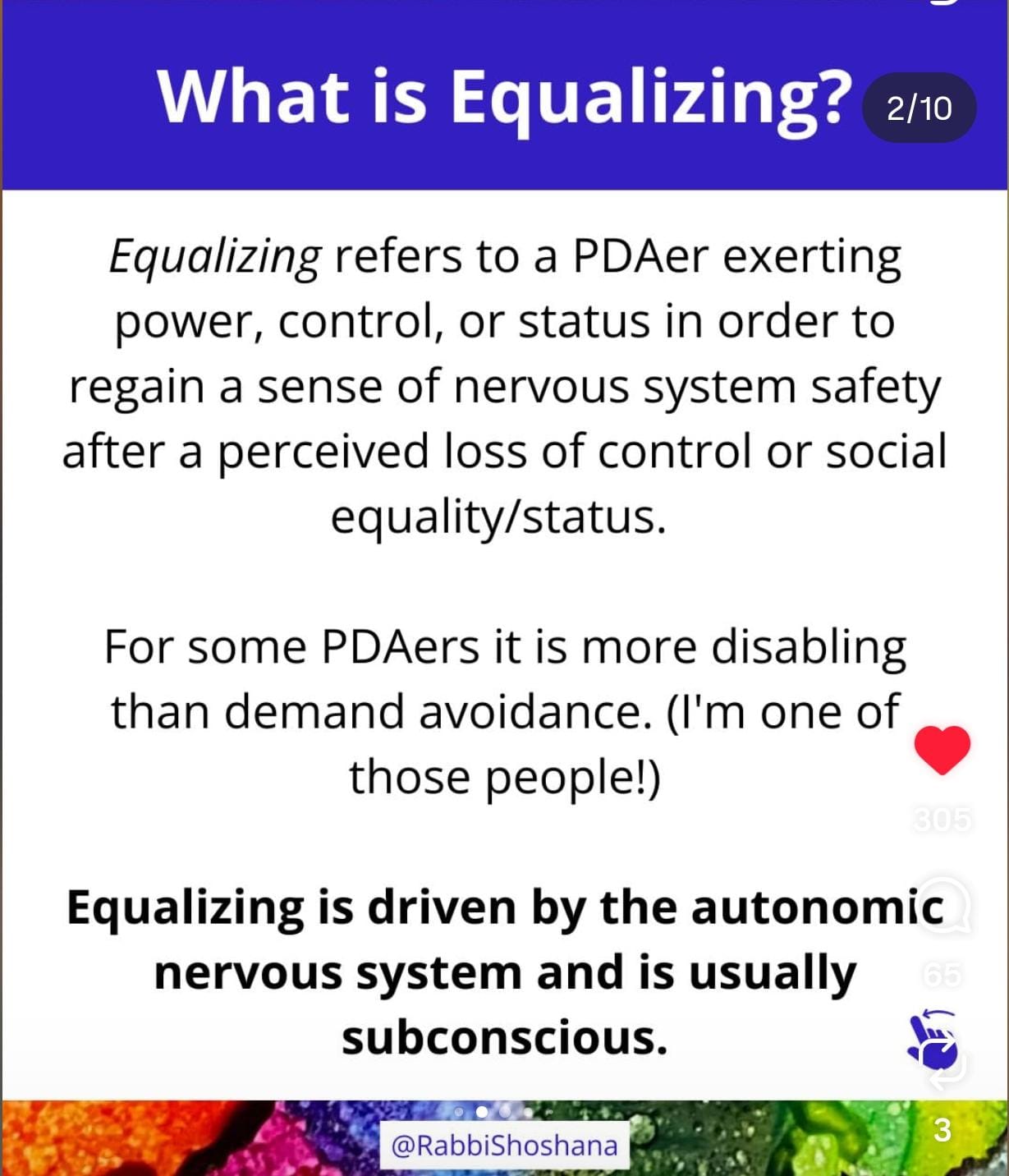
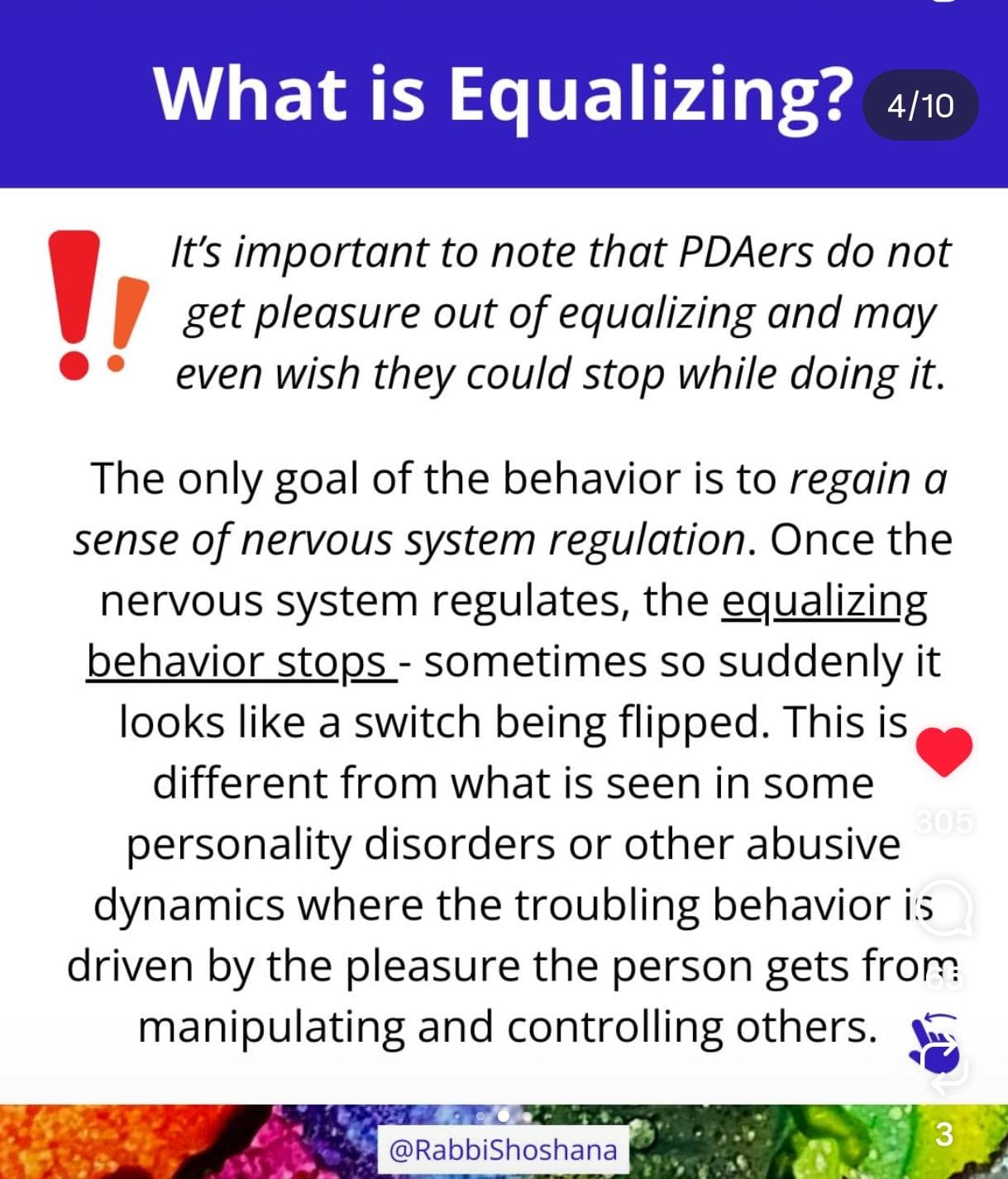
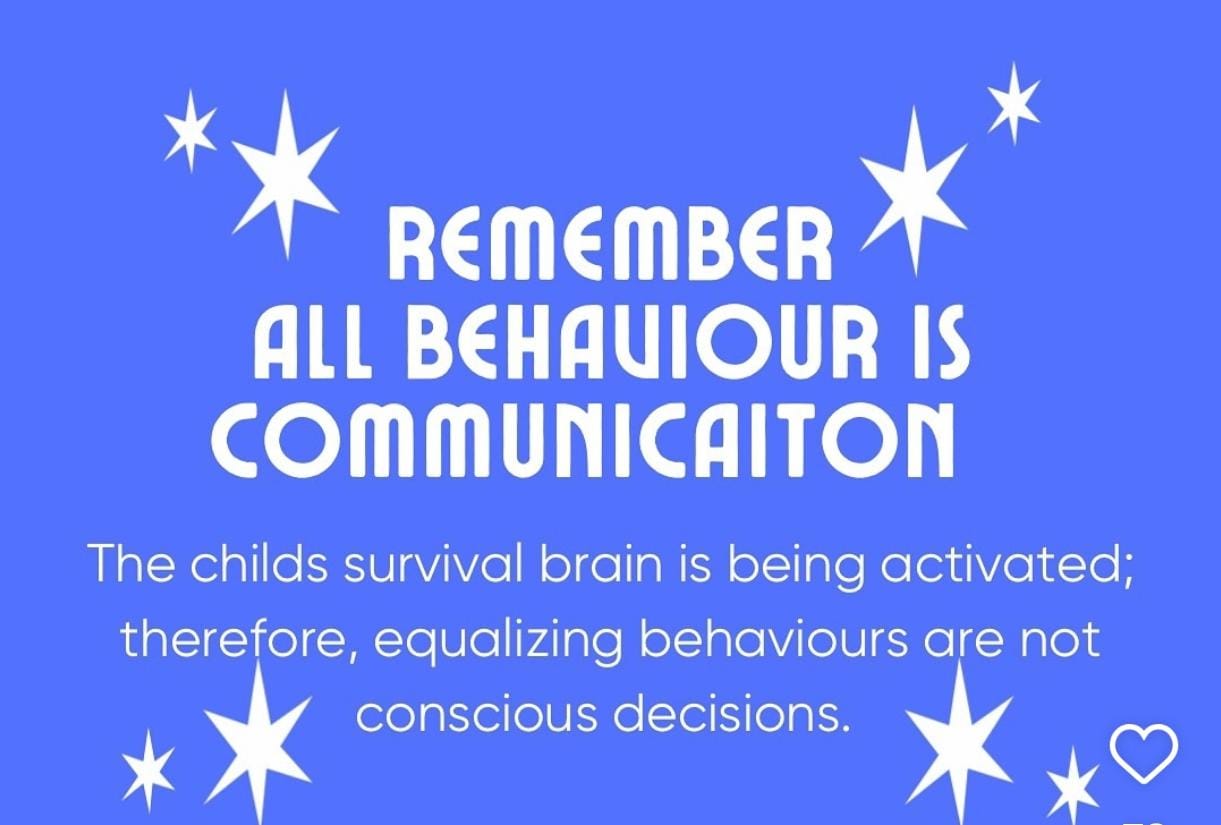
It was in that quiet session I first understood Equalizing Behaviour. For a PDAer, autonomy and safety are inseparable. Changing his covers without consent wasn’t just a “new look”—it was a rupture of his sense of safety.
Arthur’s reactions weren’t about control or mischief. They were survival. By pushing the iPads away, he was equalizing a change he hadn’t chosen. By taking control of my phone, he was reclaiming agency in a suddenly unpredictable world. He wasn’t trying to upset me; he was steadying his nervous system.
When my therapist asked if Arthur might have been attached to the covers, it reminded me of an old incident. I remembered that he used to spell “weird” words like BELK—words I hadn’t understood at the time. Later, I realized it was printed on his old iPad cover. Those covers weren’t chosen by him—we had—but over time, they had become familiar, predictable, quietly safe. By changing them, we had removed a small anchor in his world.

I’ve known about my own PDA for a long time, but I’m still figuring out what it means. In our house, we are a map of different expressions: mine more internalized, his more externalized. Internalized PDA can look like compliance on the outside while a storm rages inside. Externalized PDA, like Arthur’s, is visible—the “no” and equalizing behaviours that demand autonomy.
My therapist suggested:
"If you want to repair this, apologize to Arthur. Not to make him forgive you—but to make things better between you."
I went to him and apologized. I told him I was sorry for changing his covers without asking. I acknowledged that, even though he hadn’t chosen them, they were his, and he loved them. He began to cry. Something had landed.
A few weeks later, I quietly removed the new covers and offered the iPads again—without expectation. This time, he didn’t push them away. He didn’t immediately start using them either. But the rejection was gone. Gradually, in his own time, he is returning to his iPad.
Things didn’t return exactly as before, but the weight shifted. He still takes my phone sometimes, but it’s different now—it no longer feels like a desperate grab for survival.
We didn’t just change iPad covers; we disrupted a sense of agency. And when I slowed down, acknowledged that, and met him with understanding, Arthur let us begin again.
This wasn’t just a misunderstanding between parent and child. It was a household shaped by multiple nervous systems, all seeking safety in different ways, sometimes missing each other in moments of stress. My own PDA traits—my need for autonomy, sensitivity to perceived demands, shutdowns when overwhelmed—meant I was surviving too. Seeing this through a PDA lens helped me soften toward myself, without excusing the impact on Arthur. Repair doesn’t require perfection; it requires awareness.
Perhaps that is the quiet work of neurodivergent families: learning, again and again, how to honor autonomy—not just for our children, but for ourselves too.



.png)