
While communication doesn’t always rely on tools, access to communication tools still matters deeply—especially AAC.
For us, AAC has never been about doing it “right.”
It has always been about access with autonomy.
Arthur has access to his AAC device 24/7—not because I expect or require him to use it, but because I believe, deeply, that access itself matters. I continue to model AAC without pressure or demand, trusting that it will leave an imprint on him and on the people around him.
Communication is not a performance.
It is a right.
As Gayle Porter, Speech-Language Pathologist and developer of PODD, so beautifully states:
“Being able to say what I want to say, to whoever I want to say it to, whenever I want to say it, however I choose to say it.”
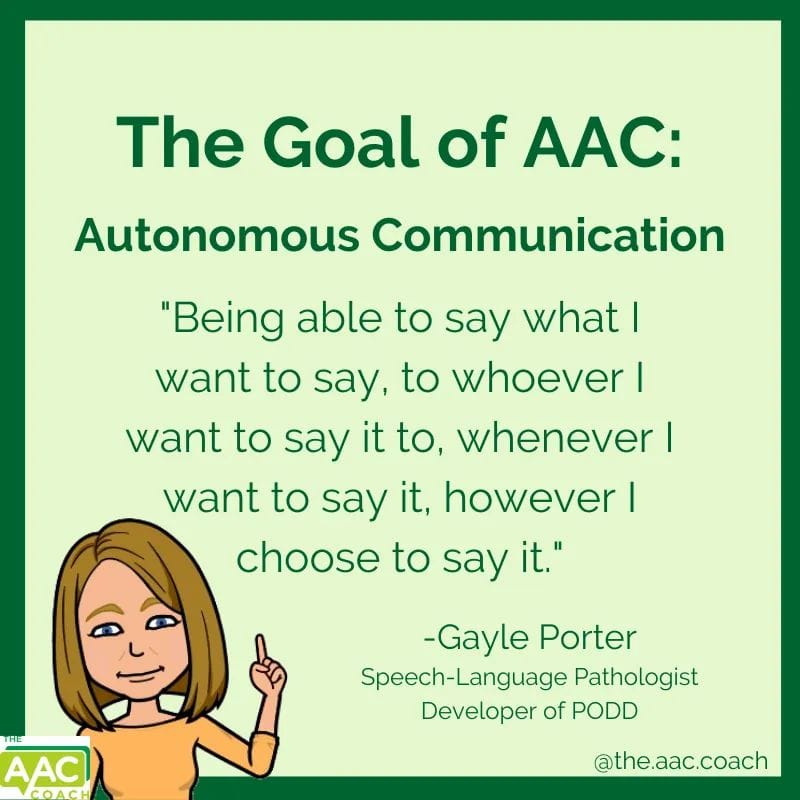
This is the heart of AAC for me—not output or compliance, but autonomy.
This New Year, Arthur seemed more drawn to his Avaz AAC app.
I noticed and gently asked,
“Arthur, are you feeling like using Avaz today to communicate?”
He opened the app and kept it open all day.
He didn’t use it—until the evening.
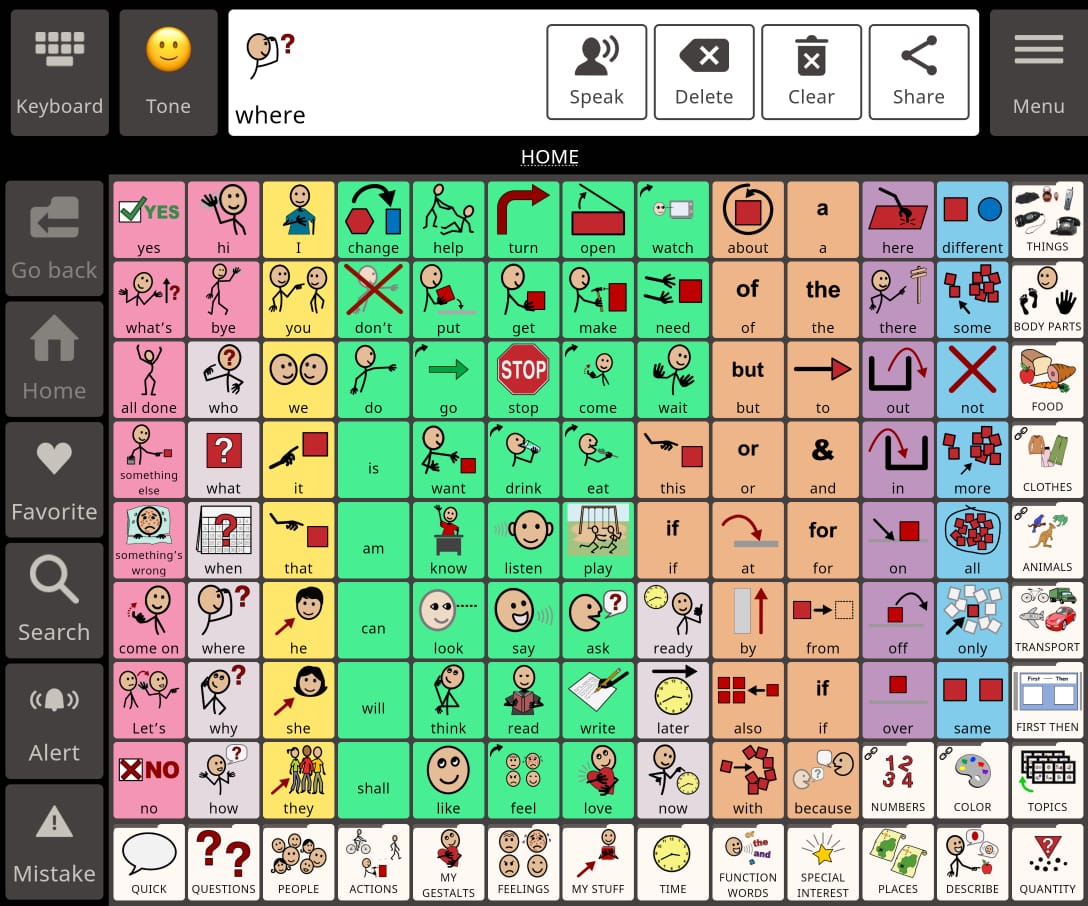
When his father left the house, Arthur pointed toward a button on his AAC screen. I didn’t immediately understand. I wondered aloud if he meant “let’s,” but instead of guessing, I waited.
Then he pressed the button himself:
“Where”
I didn’t assume.
I didn’t rush to interpret.
I responded carefully:
“If you’re asking where Papa went—he went for a foot massage because he’s in pain.”
Arthur was satisfied.
He gestured to let me know I could go and do my own thing.
That moment mattered—not because he used AAC, but because he used it when he needed it, on his terms, with trust that he would be understood.
For us, AAC is not about doing it “right.”
It is about making sure Arthur always has a way to say
what he wants to say,
when he wants to say it,
in the way that works for him.
Because true communication lives in choice—
choice of words,
choice of timing,
and choice in how his voice is shared with the world.
Reflection
These moments remind me why access to an AAC device should never be conditional.
An AAC device is not something to be earned.
It is not something to be taken away when it isn’t used “enough.”
It is not a measure of success or compliance.
We may not always know when a child will choose to use their AAC device.
But we will never know if we don’t keep it available.
And sometimes, the most meaningful communication happens not when a button is pressed—but when we choose to listen, wait, and trust.
Because communication is not about words alone.
It is about choice, trust, and being truly heard.
The Origin of the Invitation
This approach—honoring choice over compliance—wasn’t something I understood overnight. It began years ago with Melissa & Doug alphabet boards and a toddler who refused to be measured. To see the moment I first learned the power of strewing—back when I didn't even know the name for it—over direct prompting, read [When Learning Bloomed Without Being Asked | How Strewing Changed My Equation with My PDA Child]](https://bambinotherapy.com/articles/when-learning-bloomed-without-being-asked-how-strewing-changed-my-equation-with-my-pda-child/)
Further Reading
Building a life of autonomy isn’t always a smooth path. I'm sharing a more personal story about a time I got this wrong—and how a simple change to an iPad cover led to a two-year rejection. You can read about that lesson, the concept of Equalizing Behavior, and the power of repair here:
https://bambinotherapy.com/articles/a-lesson-i-learned-too-late-—-and-just-in-time/

.png)