


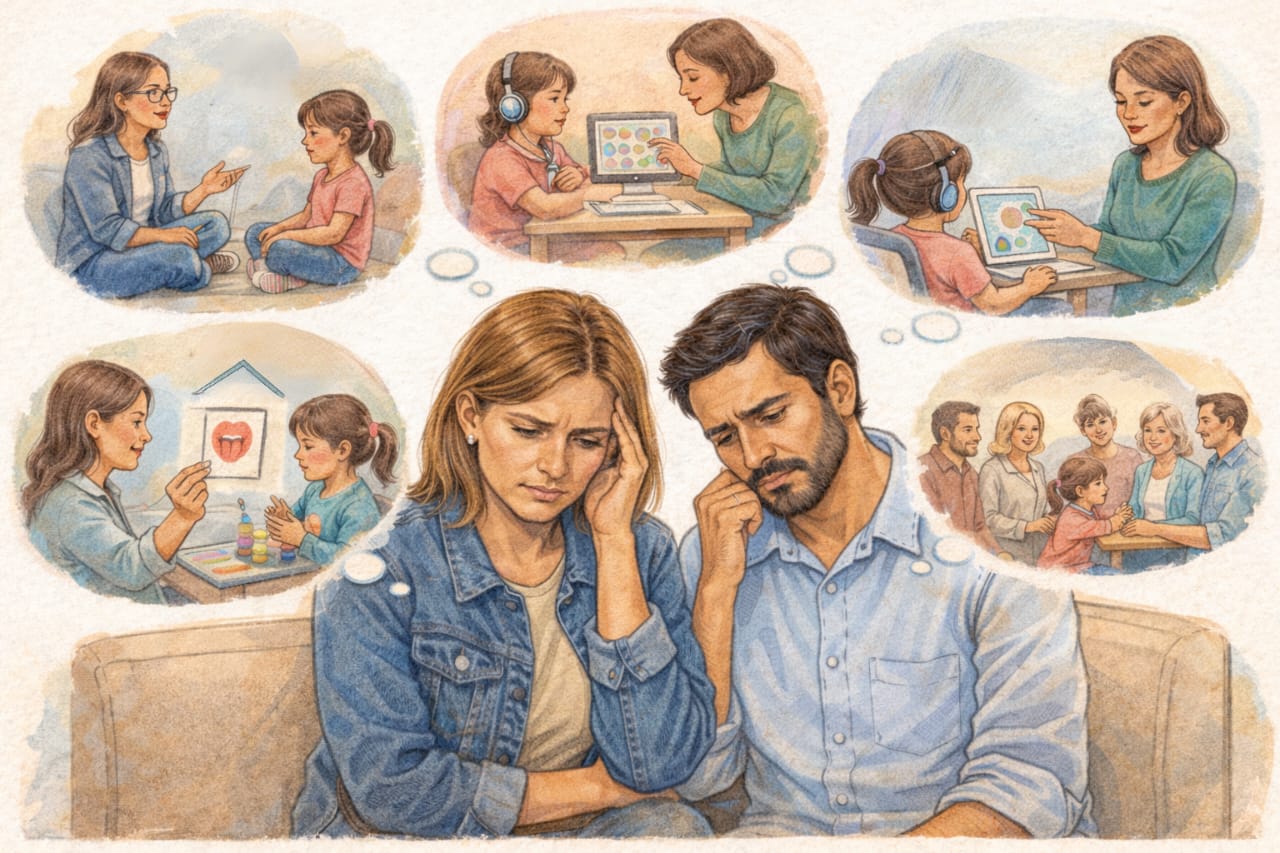
The Caregivers or parents go through a gamut of emotions when their child is given a diagnosis of a neurodevelopmental disorder for the first time. I recall when the doctors we consulted made an informal diagnosis for our son, the uncertainty of his future was a major concern. At that time, we had no access to information about autism (this was about thirteen years ago). As new parents, what we needed was information, counselling, and support from experts in the field. Usually, the worry about the unknown struggles triggers anxiety for parents.
Parents go through a grief cycle- Denial, anger, bargaining, depression, and at last acceptance. I went through this cycle of grief. It took me years to come out of that grief and accept my son as he is. I remember feeling hopeless, desperate to learn and understand what he is going through. I was numb for months, not knowing how to connect and bond with him.
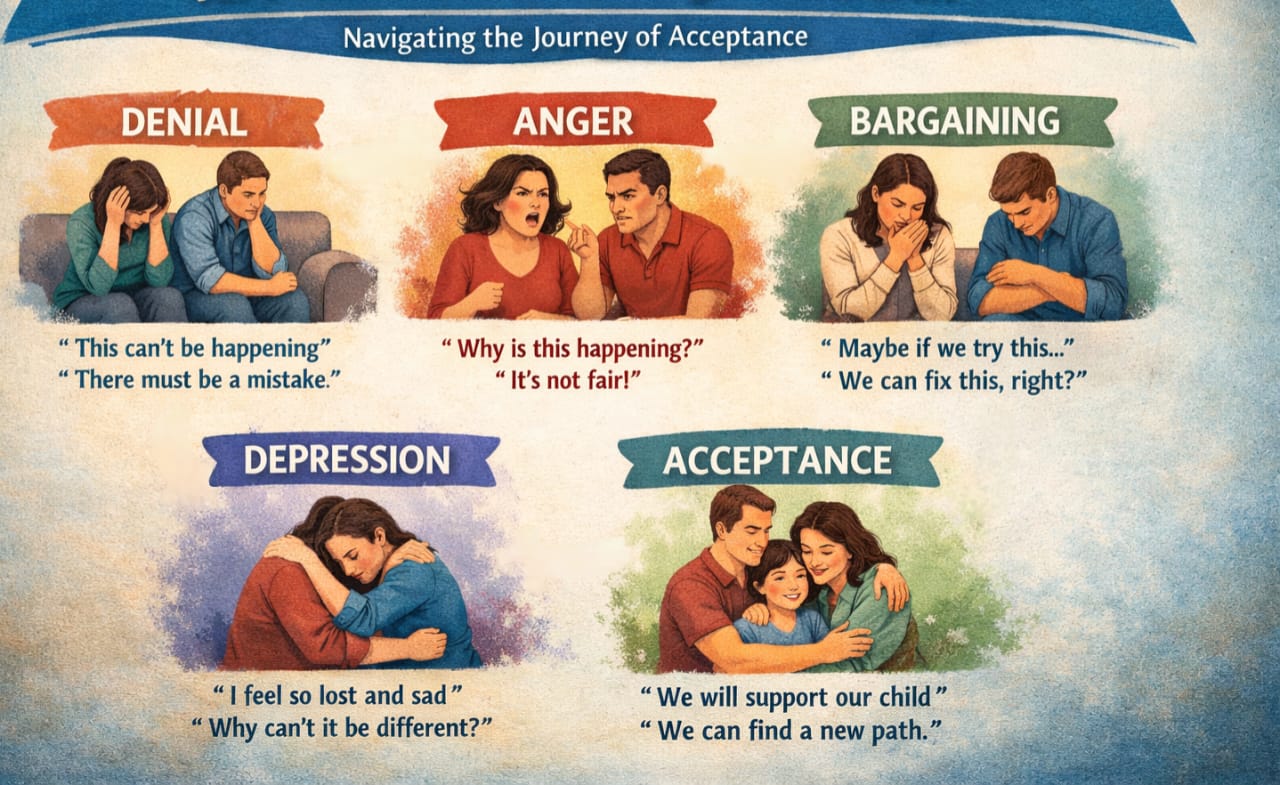
I went through stages of denial and anger at the unfairness of it all. I then decided the best way to tackle my grief was to educate myself and find out ways to help my son. I went to the therapists so that I could move forward and do the best. I was desperate, frustrated, and deeply hurt seeing my son struggle in many areas, which we normally take for granted in neurotypical children.
What to do after the diagnosis?
Here’s what I think helps parents cope in the initial years after diagnosis, based solely on my experience and not professional advice.
- · Educate yourself and the members of your immediate and extended family about the condition, and enroll in parent support groups.
- · Prioritize both your physical and mental health. Contact a psychiatrist or psychologist first; let experts guide you rather than acquaintances.
- · Consult your doctors about the therapies and help needed.
- · Your child’s therapists can help you learn more about your child’s challenges and their strengths.
- · Stand up for yourself, create boundaries, and set clear rules about unkind comments.
- · Believe in your child’s capabilities. Be your child’s first advocate. Remember, you are their voice until they find their own
- · Do not compare your child’s struggles with anyone else's, as each child has different challenges.
- · Come what may, never give up on your child. Take every challenge that comes your way as an opportunity to learn.
A neurodivergent child’s progress depends on the overall well-being of the parents. Hence, we need to keep ourselves grounded to help them. I took the help of doctors to help me cope with my mental health issues. Today, I have no shame in sharing that I have struggled with my mental health. Those struggles are what made me resilient and become a better version of myself! Through this blog, I hope to help other parents know they are not alone; all they need is to reach out for help.


.png)