
I didn’t step into parenting feeling sure of myself. Even now, I often wonder if I am doing enough, or if I am failing him in ways I can't yet see.
When my son Arthur was born, I had no idea how much he would teach me about love — real love. The kind that listens without assumptions. The kind that slows down and softens to meet someone exactly where they are. Loving Arthur has never been about having all the answers — it means staying, learning, and choosing him over and over again, even when I’m anxious, even when the path feels uncertain.
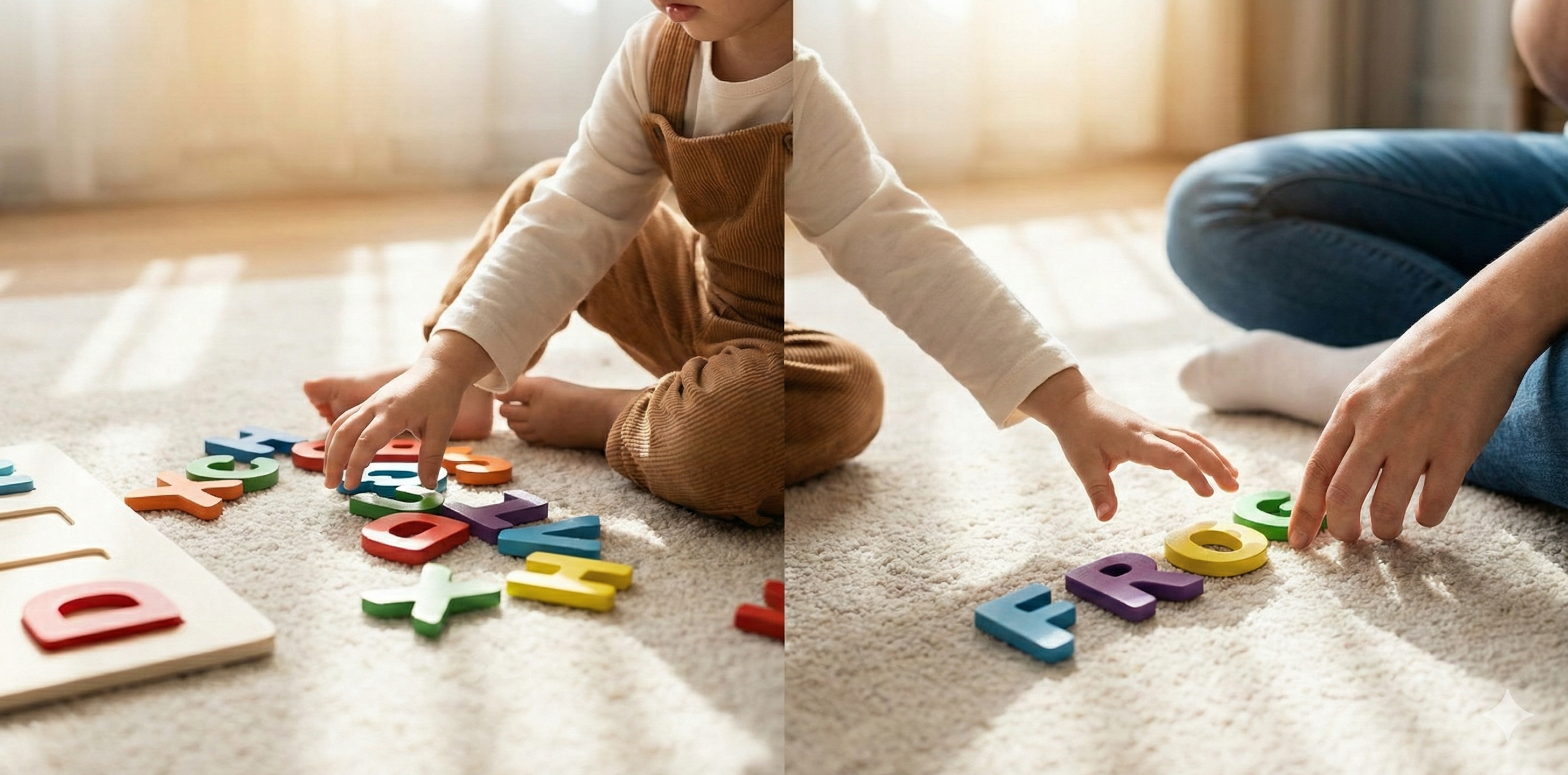
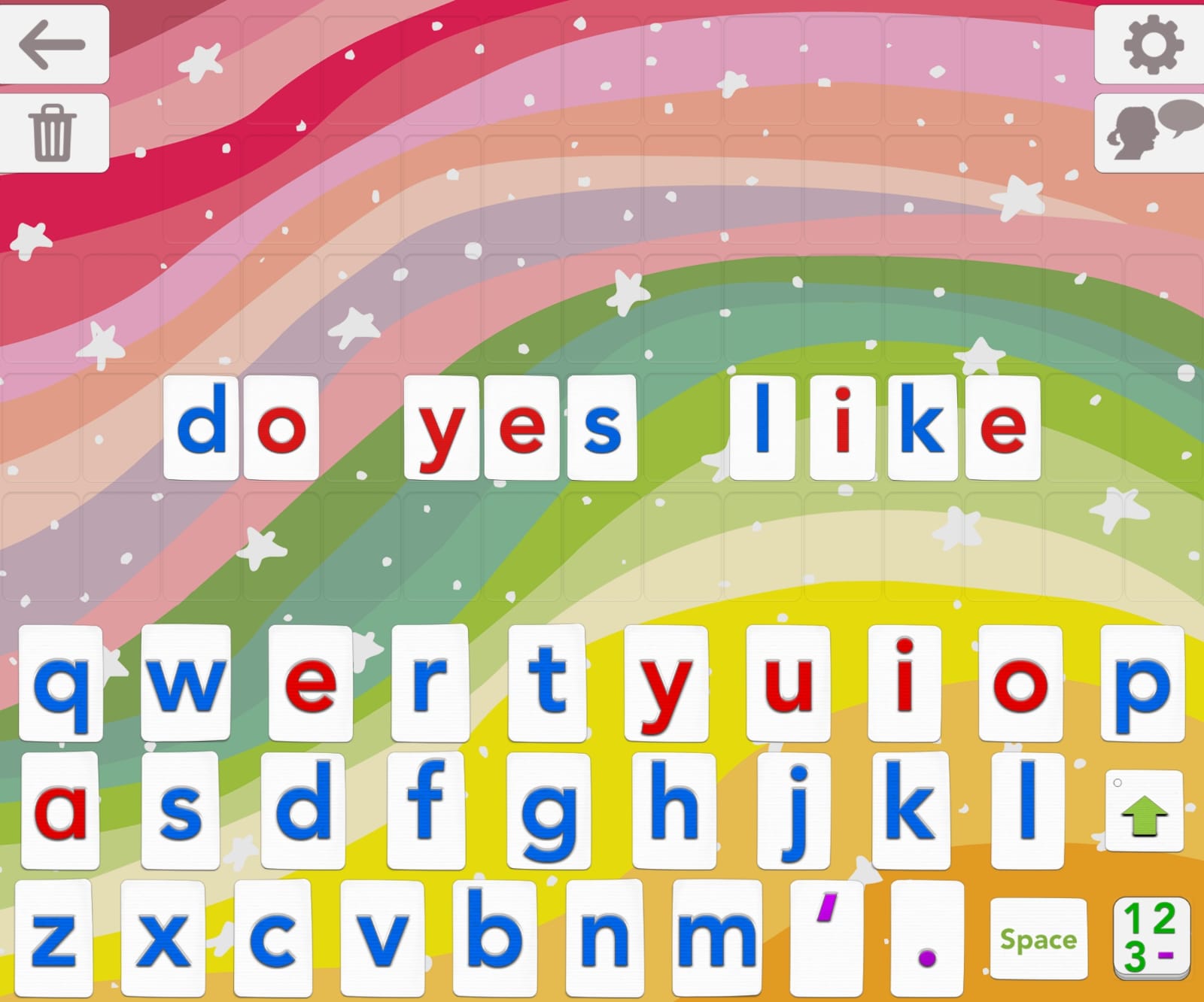
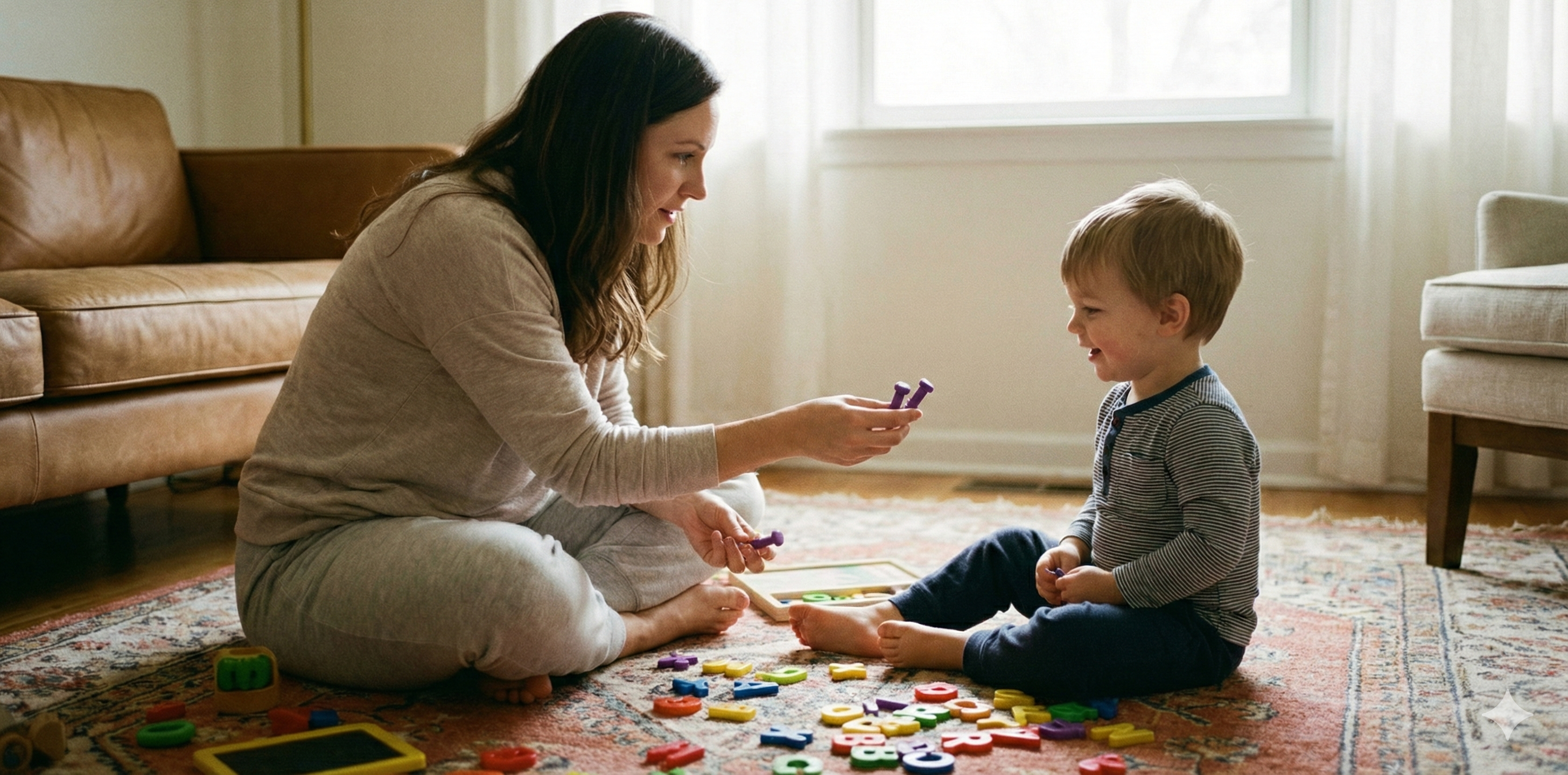
Arthur is autistic and a multimodal creative communicator. Some days he gestures; some days he spells with magnetic letters or on apps like Word Wizard or Spell 2 Speak. Some days he uses his AAC device. Some days he is silent but speaks volumes with his eyes or the way he reaches for my hand.
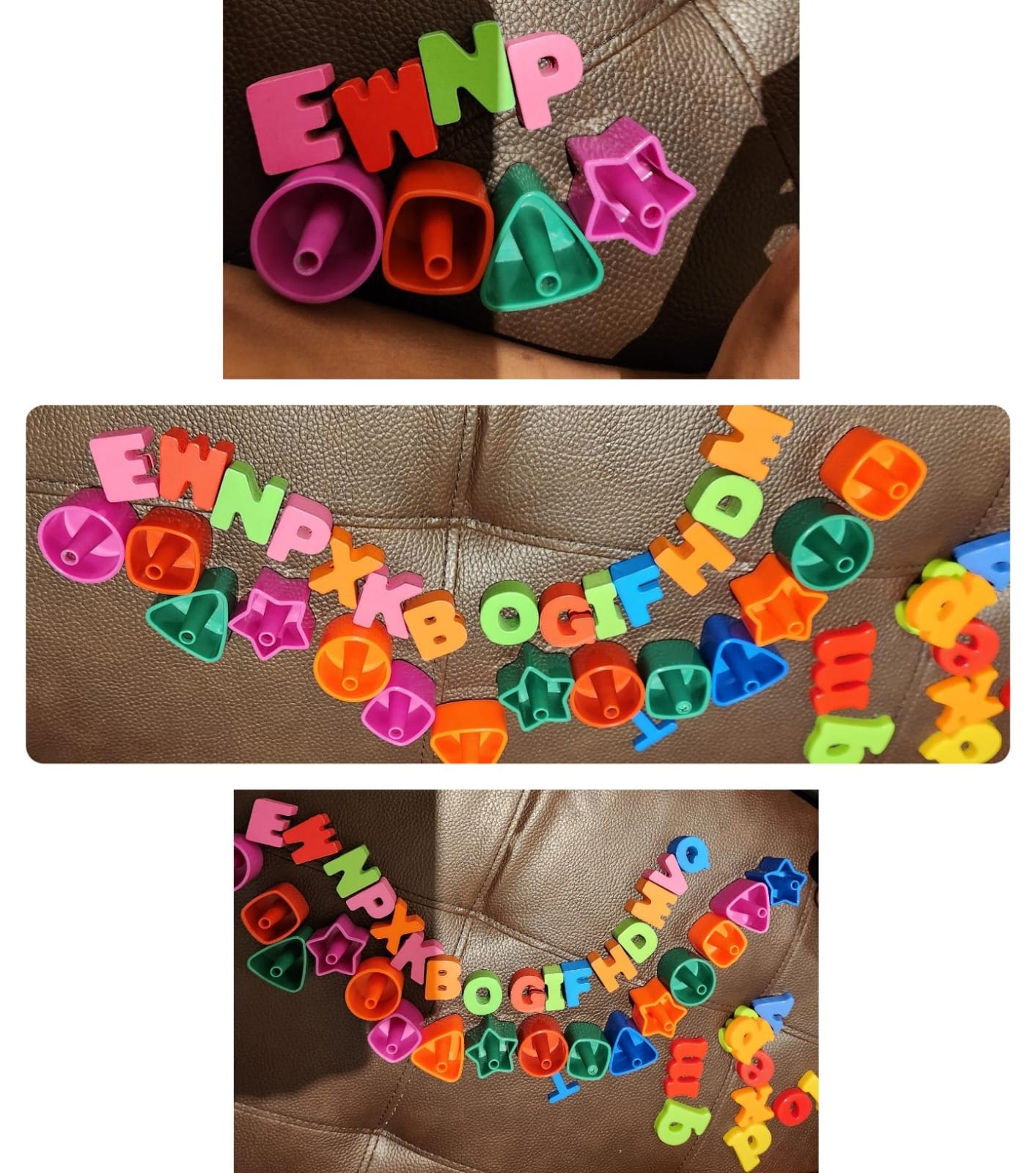
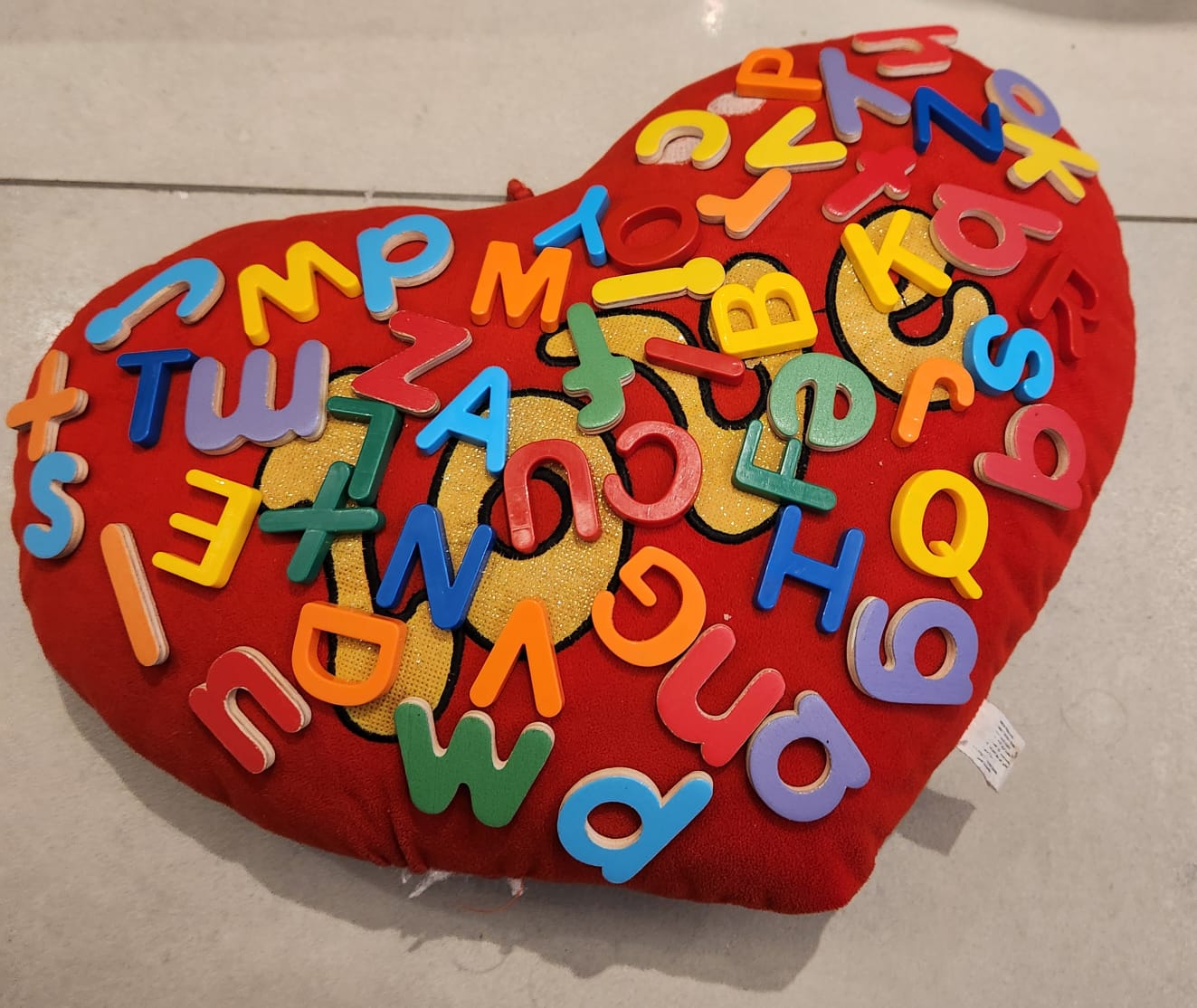
There were days when he delighted in carefully typing words into the YouTube search bar, or spelling with magnetic letters. These days, spelling has become rare. Instead, he experiments with patterns. I don’t always know what sparked his interest or what each pattern means to him, but I trust that it means something. His creations often echo the world around him — a shape pattern he noticed, a scene from a favorite video, a small moment that captured his imagination. To others, it might look like a scattering of random letters, numbers or shapes. But to Arthur, it is a language all its own — one I am still learning to read.
I used to think communication had to look a certain way: speech, sentences, joint attention. But Arthur shows me that communication is everywhere if you are willing to see it. Guiding my hand to point under the sofa isn’t just a gesture — it’s a request for help to look for his lost toy, an invitation into his world.
The more I slow down, the more I realize Arthur is always communicating. And I have the privilege of learning his language.
Loving Arthur freely means letting go of expectations that aren't ours to carry. It means celebrating every way he expresses himself — whether through a message on his AAC app, a song on YouTube, or a nuanced gesture showing his legs for an oil massage.
It also means reimagining what progress looks like. Progress isn’t about getting closer to neurotypical standards. It’s about Arthur having more ways to be himself in the world — to ask for help, to explore his curiosity.
And then there’s his sleep. Or rather, the way he doesn’t sleep like everyone else expects.
Arthur has Non-24-Hour Sleep-Wake Disorder (N24), a condition where his internal clock doesn’t sync to the 24-hour day. His internal clock moves differently — about 26 hours instead of 24 — shifting forward a little more each day. Some mornings, while the world sleeps, Arthur is wide awake at 3 a.m., happily exploring outer space, arranging intricate patterns, or listening to prayer songs — even ones sung in different languages. By noon that same day, he dozes off peacefully, resting for 9.5 to 10 hours.
Other days, he wakes with the afternoon sun, his day beginning just as others are winding down. His rhythm doesn’t follow the ticking of the clock; it follows him — shifting and full of wonder.
Loving Arthur freely means letting go of the clock. It means letting go of my own clock, too. I start adjusting my sleep to match his. Some weeks, that means living mostly at night. It isn’t easy. Sometimes it still isn’t.
Loving him freely means creating a life that bends with his rhythms rather than forcing him into a schedule that causes him distress. It means trusting that being awake at 3 a.m. exploring outer space isn’t less valuable than doing it at 3 p.m. It means seeing that what matters most isn’t the time on the clock — it’s the joy in his face, the learning, the connection, the comfort of being understood.
The more I let go of the world’s timelines, the more I see Arthur for who he truly is: curious, thoughtful, determined. His growth doesn’t follow a neat chart or a planner’s grid — it follows the organic flow of him. Loving Arthur freely reminds me: the measure of success isn’t in milestones or timelines — it’s in the connection we build, the trust we protect, the joy we find simply being together.
There are hard days. There are lonely days. Sometimes it feels like the world wasn’t built for kids like Arthur — kids with different communication styles and needs that don’t fit neat categories.
But then I remember: loving Arthur freely means choosing him every time over the noise. It means building a life where he can flourish, even if — especially if — it looks different from the lives around us.
Loving him freely means I stretch my own ideas of time, of productivity, of success. It means I measure our days not in hours conquered but in moments connected — a giggle at midnight, a hug at sunrise, a whispered story while the world outside is sleeping.
It means I remember: he is not broken.
He is simply dancing to a different rhythm.
And the most important thing I can do is dance with him.
To the other families walking this less-trodden path: you are not alone. Your child’s unique rhythm, their beautiful way of being, is not a deviation from success — it is success. There’s magic in being seen. And there’s even more magic in seeing our children exactly as they are — and loving them freely.
If this piece spoke to you, you might also find meaning in Breaking Communication Barriers: What Arthur Taught Me About Patience and Trust. It’s a story about the hidden breakthroughs that appear when we stop pushing and start trusting.
https://bambinotherapy.com/articles/breaking-communication-barriers-what-arthur-taught-me-about-patience-and-trust/
f you’d like to read more about the quiet shift in perspective that changed my relationship with Arthur, you can find my personal reflections here:
.png)