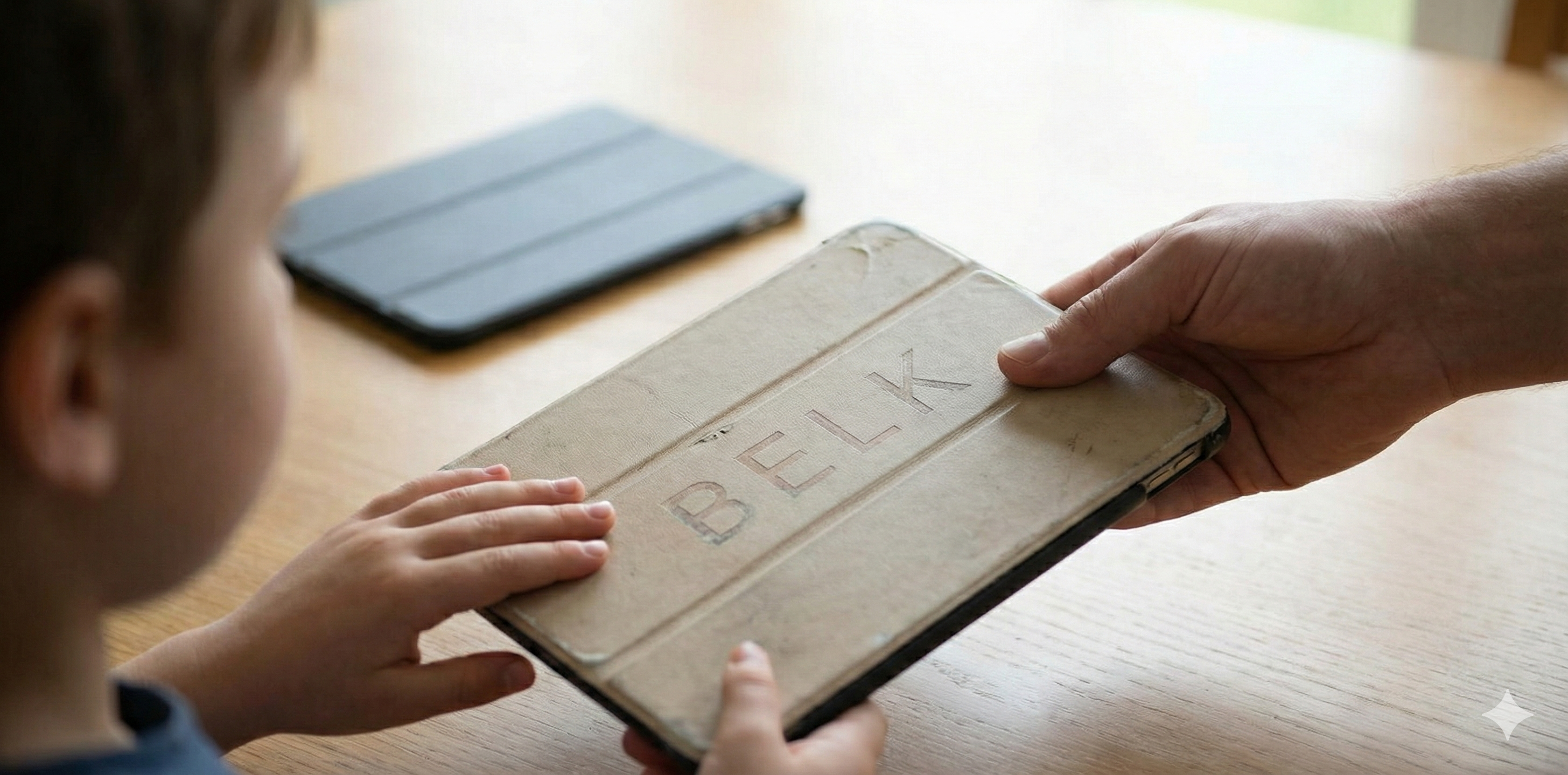

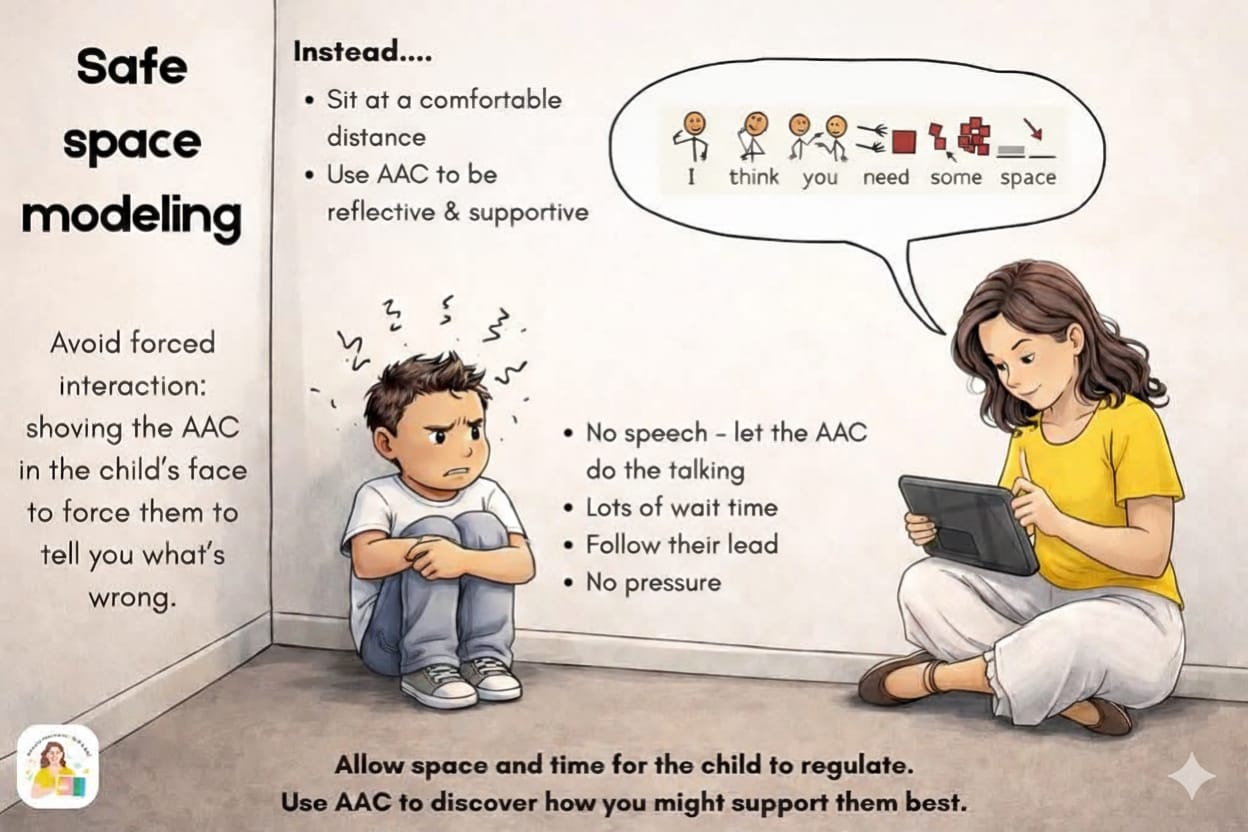
In Part I, I explored how “Thinking Aloud”—narrating my process rather than asking for answers—helped Arthur find safety when my help felt like pressure. I realized that for a PDA neurotype, even a helpful choice can feel like a demand.
In Part II: I’m digging deeper into the "messy middle." What happens when my own nervous system is already overdrawn? This is a reflection on task-switching, the physical weight of demands, and the humbling path of repair when things go wrong. What follows is not a story of seamless strategy or success, but of rupture and repair. There is a moment in this reflection that I am not proud of, and one I continue to work through with professional support. I’m sharing it not to excuse harm, but to name the reality that regulation is not linear—and that finding our way back to each other often begins with honesty.
When My Nervous System Was Already Overdrawn
One morning, I was working on a video on Canva. Arthur woke up, and I had to pause—reluctantly—to prepare his breakfast. Inside me, there was a tug-of-war.
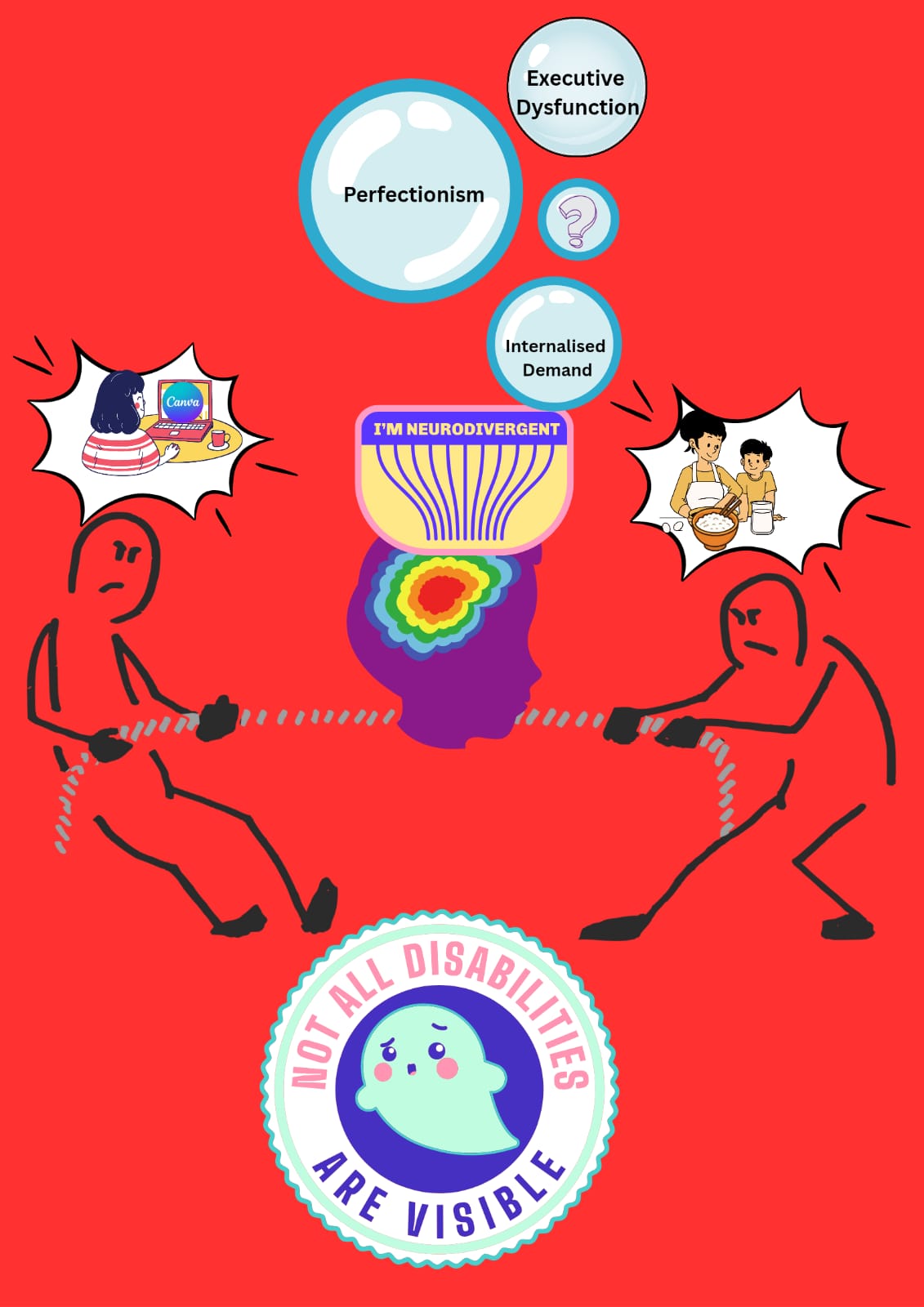
One part of my brain wanted to finish the video cleanly and properly; another part knew that feeding my child mattered more.
I kept reminding myself—again and again—to switch tasks. Yet my attention kept slipping back to the unfinished video. I don’t know whether this friction came from ADHD-related executive dysfunction, OCD-leaning perfectionism, internalised PDA, or some tangled combination of all of them. What I do know is that task-switching felt physically hard.
By the time I finished preparing his breakfast, I felt quietly guilty—for taking too long, for not being fully present. Arthur, sensing the invisible pressure in the air, was already dysregulated.
When Help Turned Into a Demand
In his urgency, Arthur gestured for me to help find a missing toy. It happened in his playroom. I was not regulated, and my body experienced his request as a demand. I suspect he sensed that—my tone, my sharpness, the invisible pressure between us.
I said, “Can we eat breakfast first, before I look for your toy?”
He lashed out. He hit me. And in a moment I deeply regret, I hit him back.
Thankfully, my husband intervened. That interruption gave me the seconds I needed to regulate.
Context matters here. Arthur hadn’t been able to go outside—especially to his favourite mall—for the entire week. He had been showing what I understand as equalising behaviours: attempts to regain safety and balance in his nervous system. I had already been navigating days of being told where to sit, where to sleep, and when to eat. There was resistance around clothes, diapers, and transitions. I was being kicked repeatedly, already in physical pain.
I also hadn’t been able to go for walks or to the gym because Arthur didn’t want me to leave home. I felt trapped. I felt like I had no control over my own life. That week felt unbearable. I knew—intellectually—that these behaviours were about safety. But emotionally and physically, I was exhausted, depleted, and angry at my circumstances.
This is the context in which that moment happened. Not as an excuse—just as truth.
Repair, Not Perfection
After I regulated, I wondered whether Arthur was actually searching for his magnetic wooden alphabets. I brought the box from the next room and placed it on the floor mat so it wouldn’t feel like a direct demand. He didn’t seem fully satisfied—but he chose to eat his breakfast first. Perhaps that choice itself was communication. Perhaps he noticed my effort to repair.
I remembered what I had written before—how the expectation to respond creates pressure—and realized that by placing the box of alphabets on the mat without a word, I was removing that pressure entirely.
After breakfast, I apologised to him. I asked—humbly—if we could try to help each other better next time, as a TEAM.
I prayed aloud.
Jesus, help us. Mumma Mary, pray for us. Holy Spirit, guide us.
Maybe he prayed with me, in his own quiet way.
The Missing Pieces
Arthur went downstairs and sat on the sofa where he had slept earlier. There was urgency again—like something essential was missing.
I vaguely remembered him holding something in both hands that evening, but I couldn’t recall what. I asked my husband if he had noticed anything while carrying Arthur upstairs.
He hadn’t.
I checked the bedroom.
Nothing.
I prayed again. Then I came downstairs and checked under the pillow on the couch.
There they were—two naughty little purple pegs, hiding.
Arthur’s face lit up. He took them, and I could feel the shift. Safety returned to his body.
When Regulation Changed the Moment
A few days later, things looked different. Arthur had gone to his favourite mall. I had found a new way to exercise—walking in the backyard for half an hour with music, under Arthur’s supervision. I still miss the gym, but my husband and I also found time to play badminton together.
We were both more regulated.
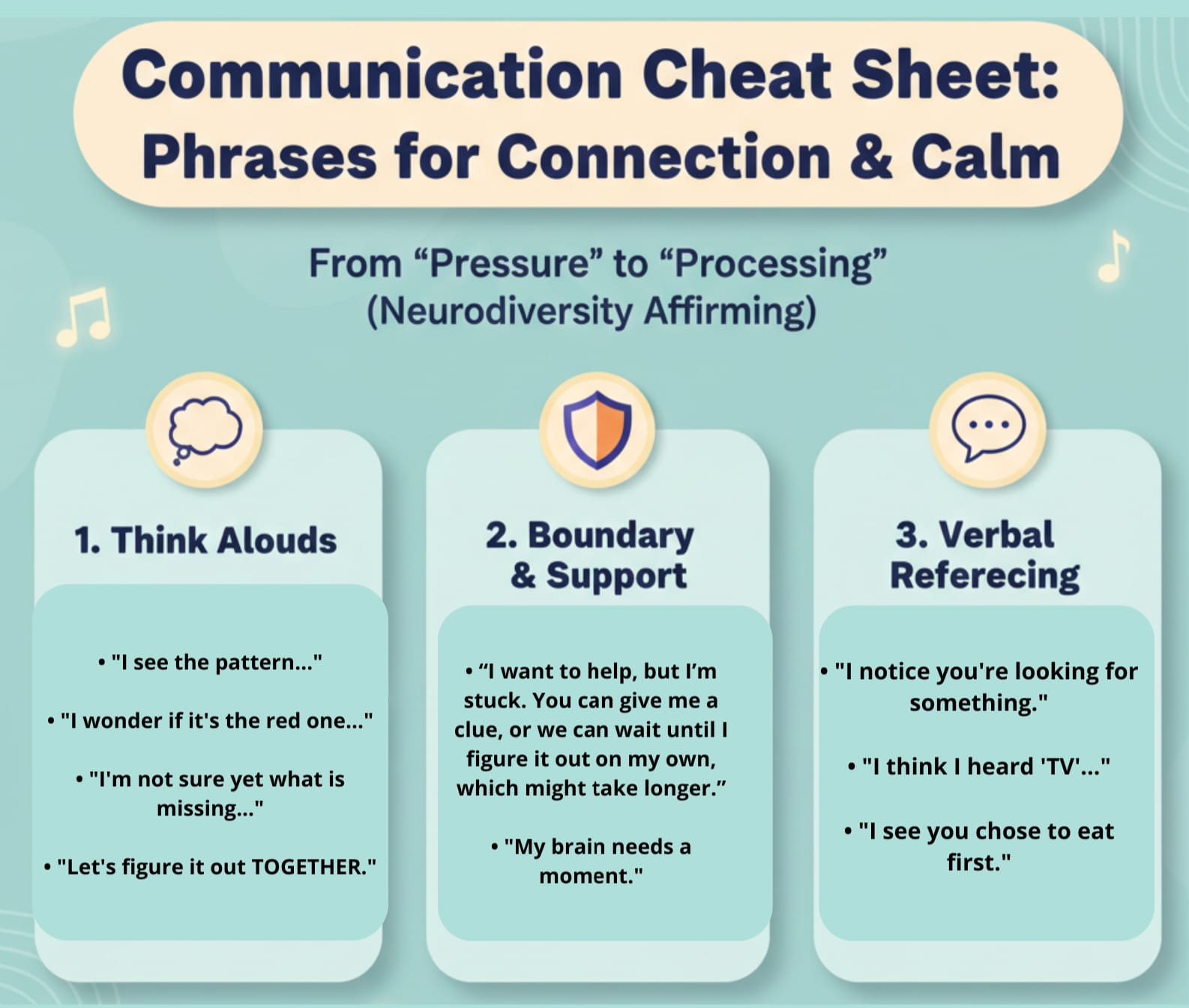
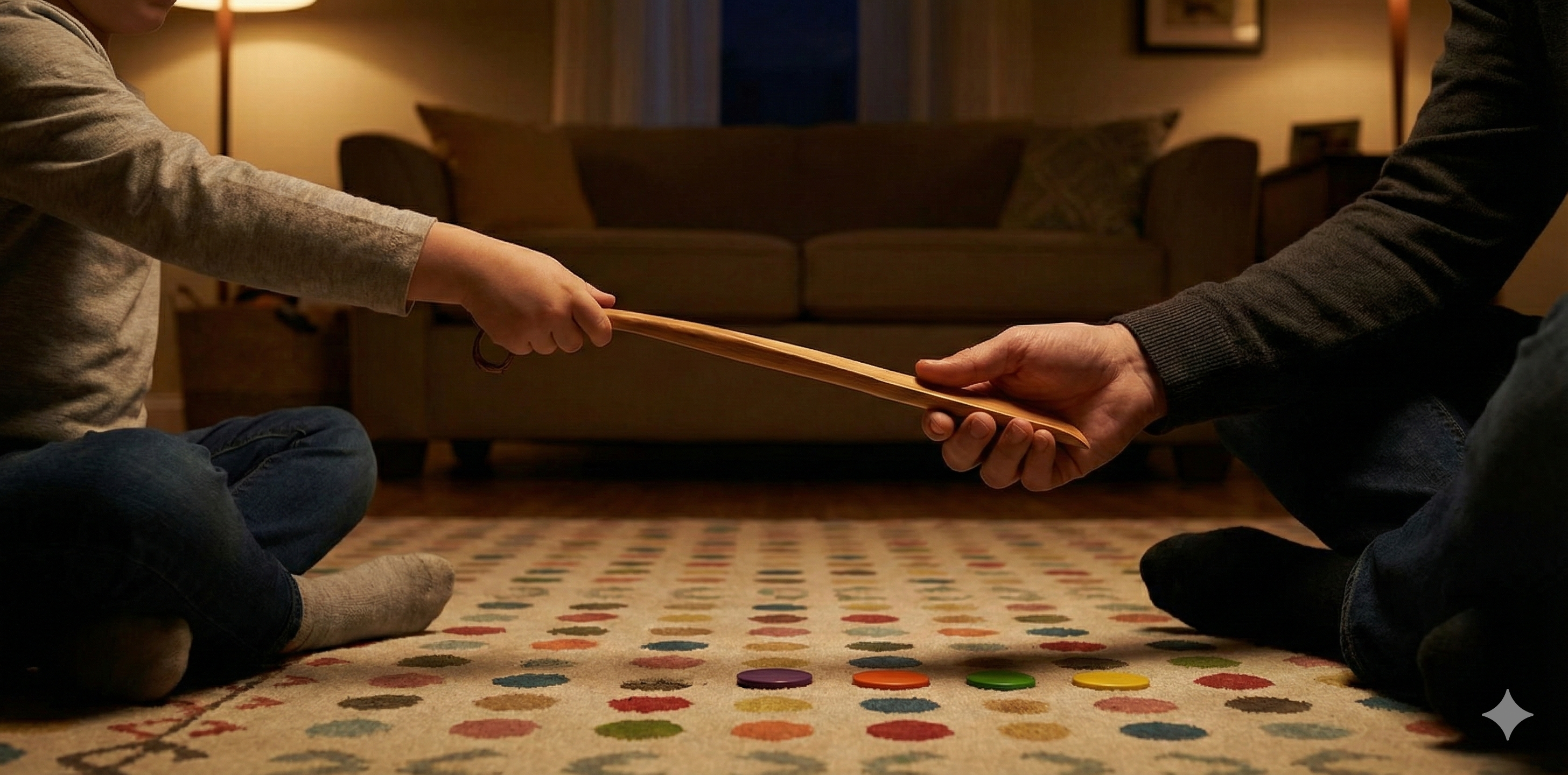
So, when Arthur picked up the shoe stick again and brought it to me, signalling that something was missing, I tried a phrase my therapist had suggested: “I want to help, but I’m stuck. You can give me a clue, or we can wait until I figure it out on my own, which might take longer.”
This time, it didn’t land as a demand. He chose to wait—calmly—turning on one of his favourite songs while I took the time I needed to discover what was missing, and where it was hiding.
Still Learning, Still Human
Even while writing this very reflection, Arthur woke up. I felt that familiar heaviness of task‑switching, but this time, I could wait. He finished his breakfast fast. That itself felt like grace.
Then, Arthur used his AAC device to say: “Help.”
Scaffolding with Strategy
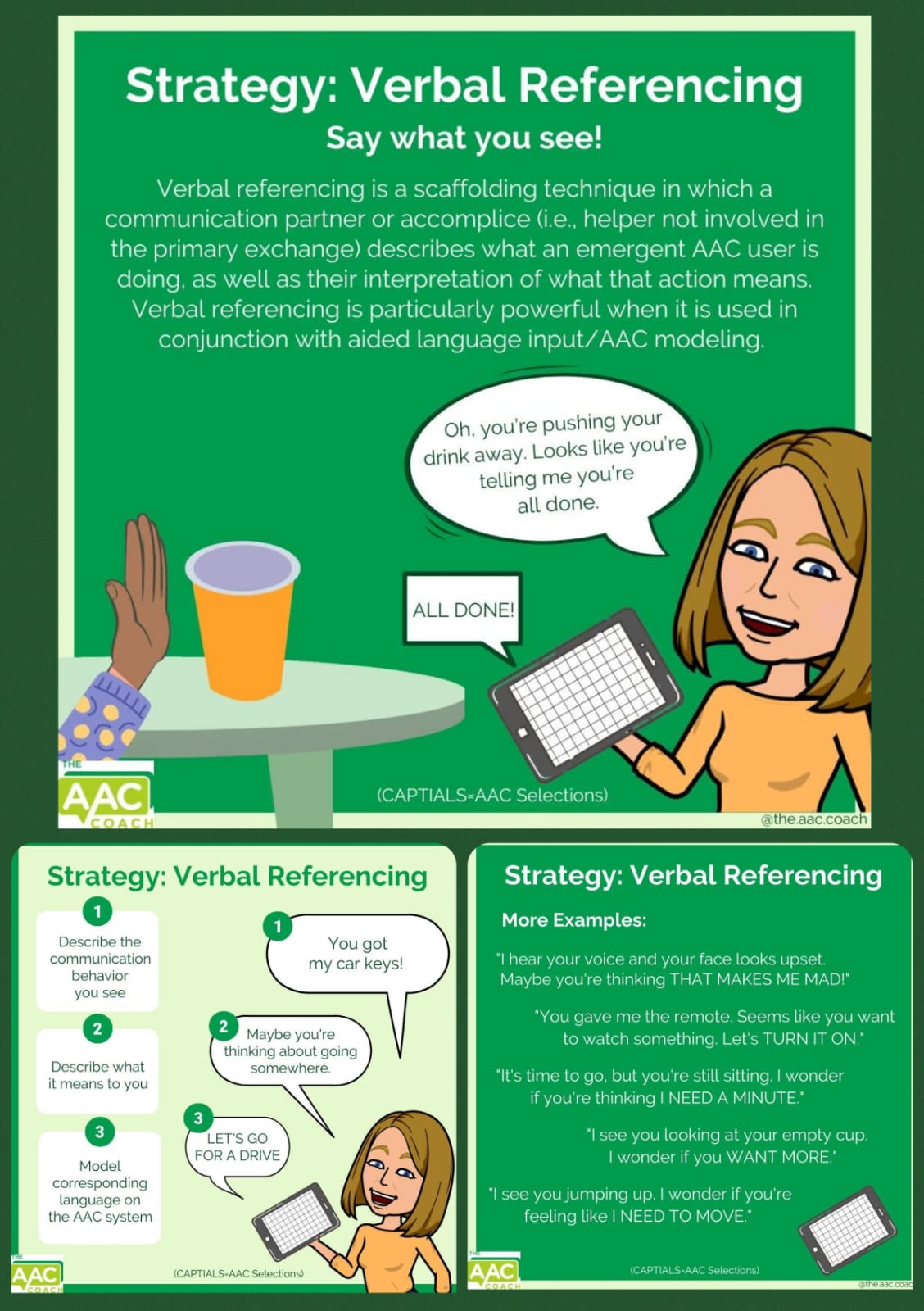
I stayed regulated and used the strategies I learned from Kate McLaughlin (The AAC Coach). Think Alouds allowed me to talk through my process: “I wonder what you need my help with. I see your alphabets are here. I see your pegs are intact. I’m not sure yet what is missing.”
I also leaned on Verbal Referencing, a scaffolding technique where I describe what I see Arthur doing and my interpretation of it.
I sat back down to my writing, giving him space. Then, I heard it from his device: “TV.” He deleted the word before I could even walk over. I had an urge to request him to repeat it, but I curbed that tendency.
I simply used verbal referencing: “I think I heard TV, and now I’m noticing the remote is missing.”
I found it just in time. Arthur was delighted. There was no hitting, no pressure—just a clear message, a respect for his voice, and a successful connection.
Communication Cheat Sheet Graphic
A Concluding Meditation
We remain empty when we obsess over the one giant thing that cannot fit—the perfect success, the perfect response, the perfect regulation—while overlooking the small mercies that quietly sustain us.
I picture that jar with the enormous stone balanced on its rim, too large to enter. It represents the flawless morning or the motherhood untouched by rupture. But the jar doesn't fill that way. This is a record of repair—of what happens when grace meets us not in perfection, but in honesty.
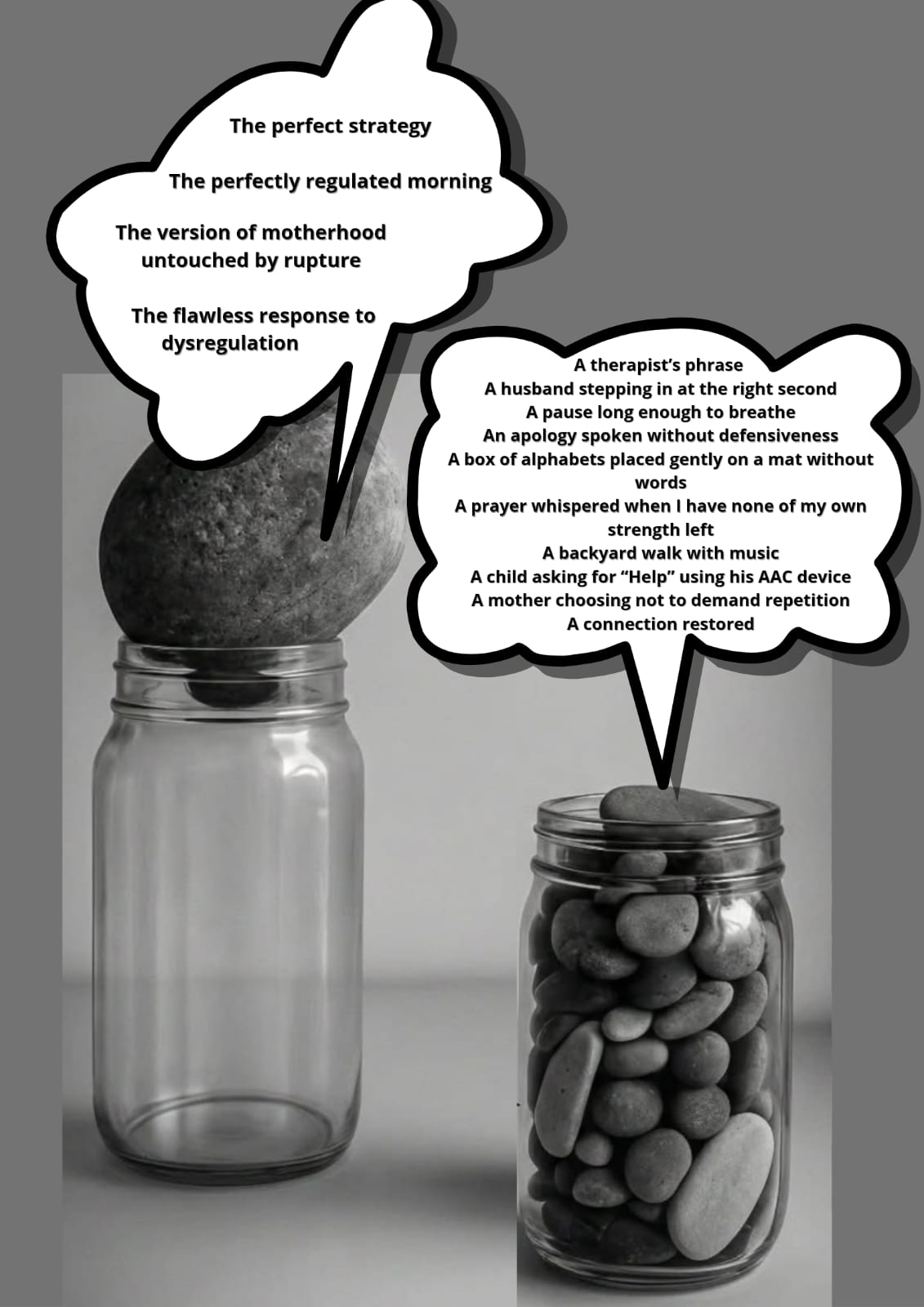
How often have I tried to force the large stone in?
The perfect strategy.
The flawless morning.
The version of motherhood untouched by rupture.
But the jar does not fill that way.
The giant thing may not fit, but the smaller stones do:
- • An apology spoken without defensiveness.
- • A box of alphabets placed gently on a mat.
- • A prayer whispered when I have no strength left.
- • A child asking for “Help” using his AAC device.
- • A mother choosing not to demand repetition.
These are not dramatic victories, but together they build something sturdy—safety returning to a child’s body and humility returning to mine. So I release the stone that does not fit and gather the small things instead.
And sometimes, by grace, they are enough.
Praise the Lord!
.png)