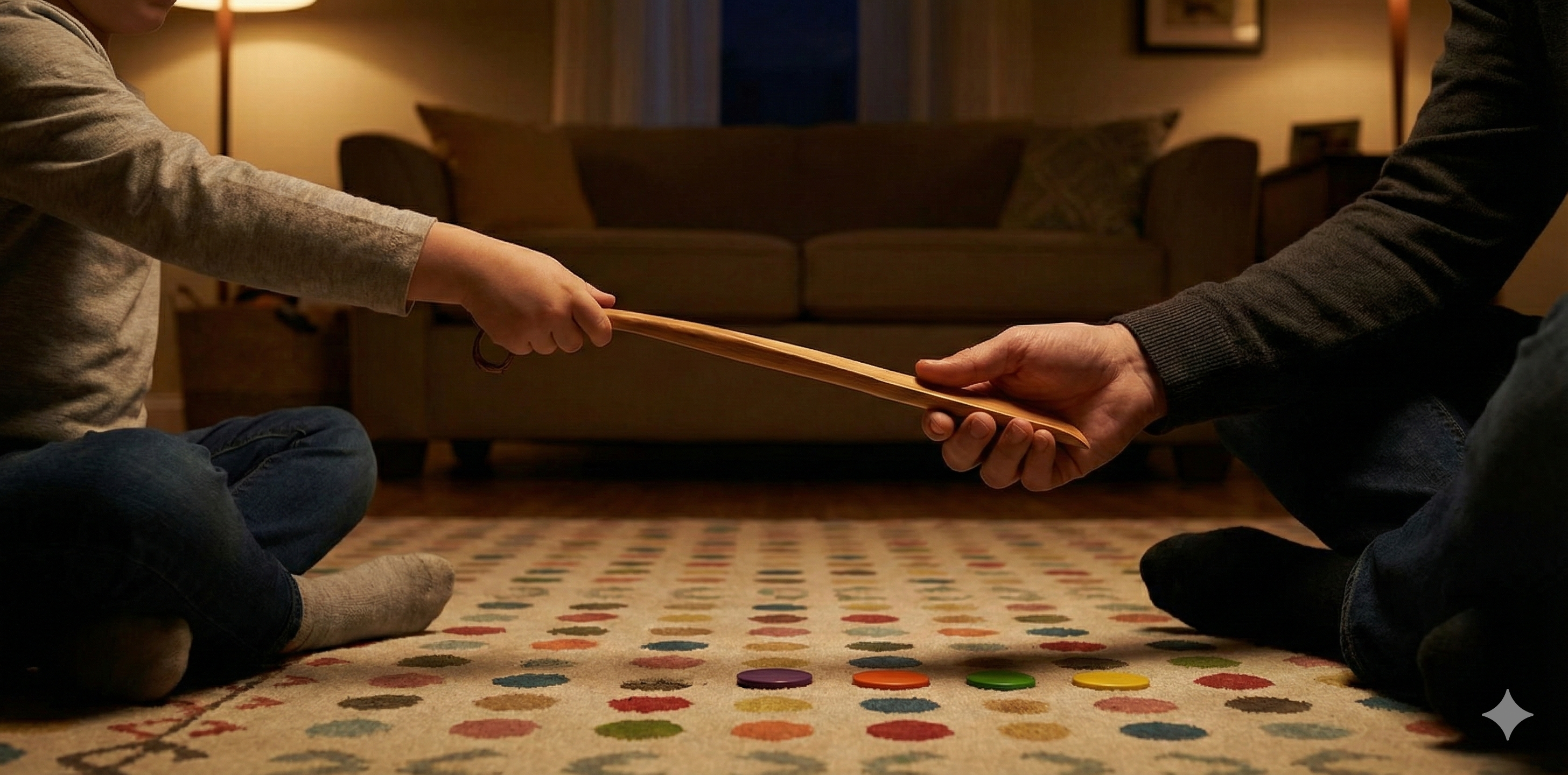

Recently, we had a moment that perfectly captured the evolution of Arthur’s communication—and the growing pains of my own understanding as his partner in this dance.
The Evolution of an SOS
Years ago—and still at times, depending on his threshold of tolerance and level of dysregulation—when something essential in Arthur’s internal order goes missing, his distress may show up as crying or self-injury—regulatory responses—ways his nervous system signals a need before language or tools are fully engaged.
He began using my finger to point under the bed or sofa to mean something was missing. The pointing wasn’t about location; it was about absence.
Then came a shift he created himself.
Arthur began using the shoe stick—the tool I use to reach things under the sofa—as a symbolic communication system. Handing me the stick became his self-authored way of saying:
The world feels incomplete. Something vital is missing. Help me find it.
In the hall, he uses the shoe stick. Upstairs, he uses finger-pointing. He adapts his language to the environment.
This adaptation shows his brilliance, but it also requires me to attune to a symbolic world where a missing object isn’t simply lost—it represents a disruption in his internal order, one that calls for shared regulation between us.
Most days, I can meet him there. That night, it was harder.
The Midnight "Detective" Moment
It was midnight, but for Arthur, it was the beginning of his day. My sleep schedule was already inverted to match his, leaving me in that hazy space where patience is thin. Arthur was waiting for me in in the living room, near the hall holding the shoe stick.
He handed it to me.
I wasn’t keeping well. I heard the irritation in my own voice before I fully registered him. I told him honestly that I understood something was missing, but that my capacity to search for it was limited at that hour. I didn’t have the energy to be in “detective mode.”
He handed me the stick again.
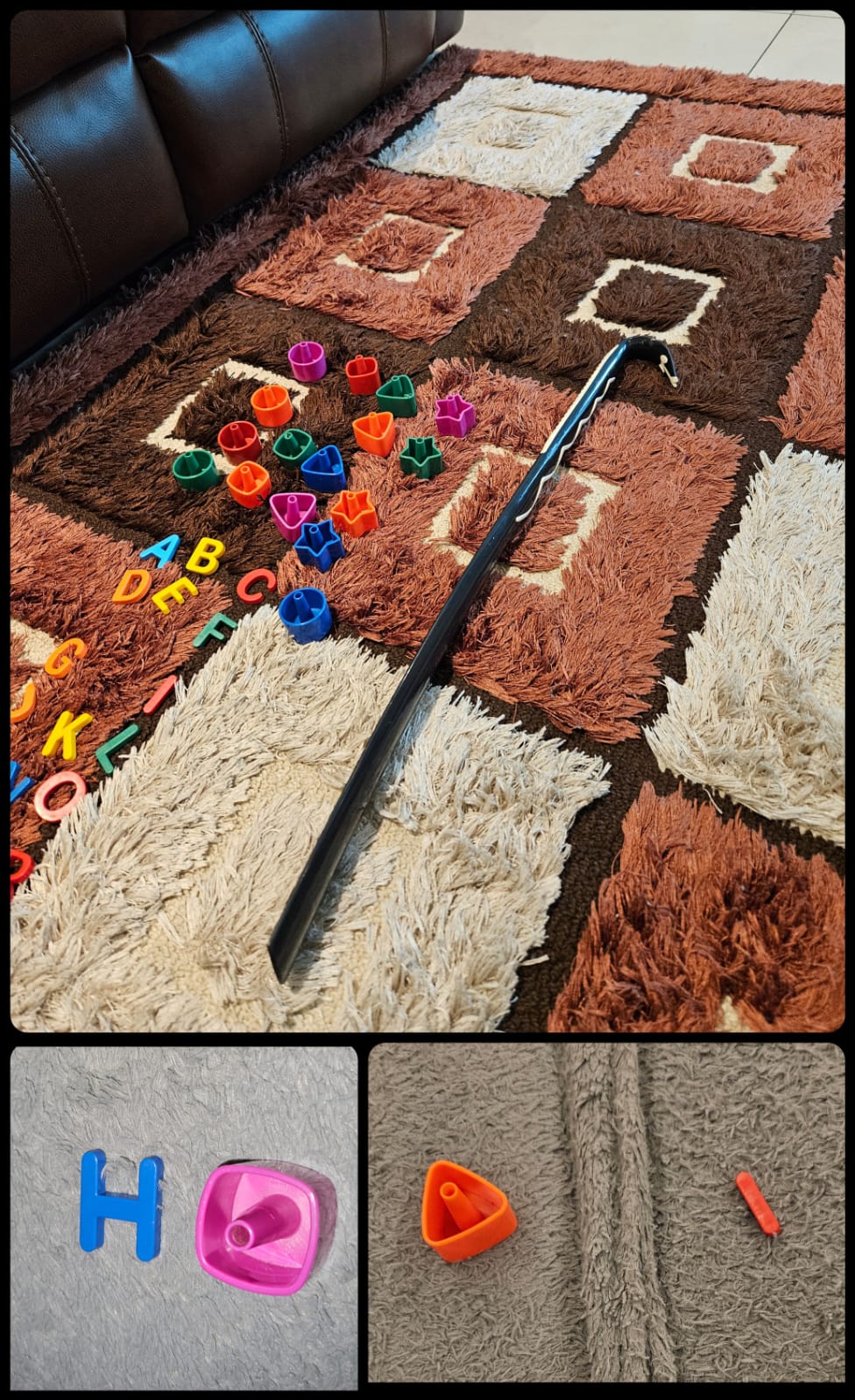
He noticed my tone shift, and his distress rose quickly. I paused, forced myself to slow down, and began looking for clues. I noticed he had been playing with alphabet letters and colourful pegs. A single peg was missing from the pattern he had created. In his logic, that peg was linked—by a specific sequence—to one of the letters.
I offered him two options to help me understand: using his Shapes and Colours subfolders on his AAC app, or pointing to the other pegs to show me the shape and colour of the one that was missing.
The mismatch was immediate: what I intended as support landed for him as pressure.
Thinking Aloud: Mutual Regulation
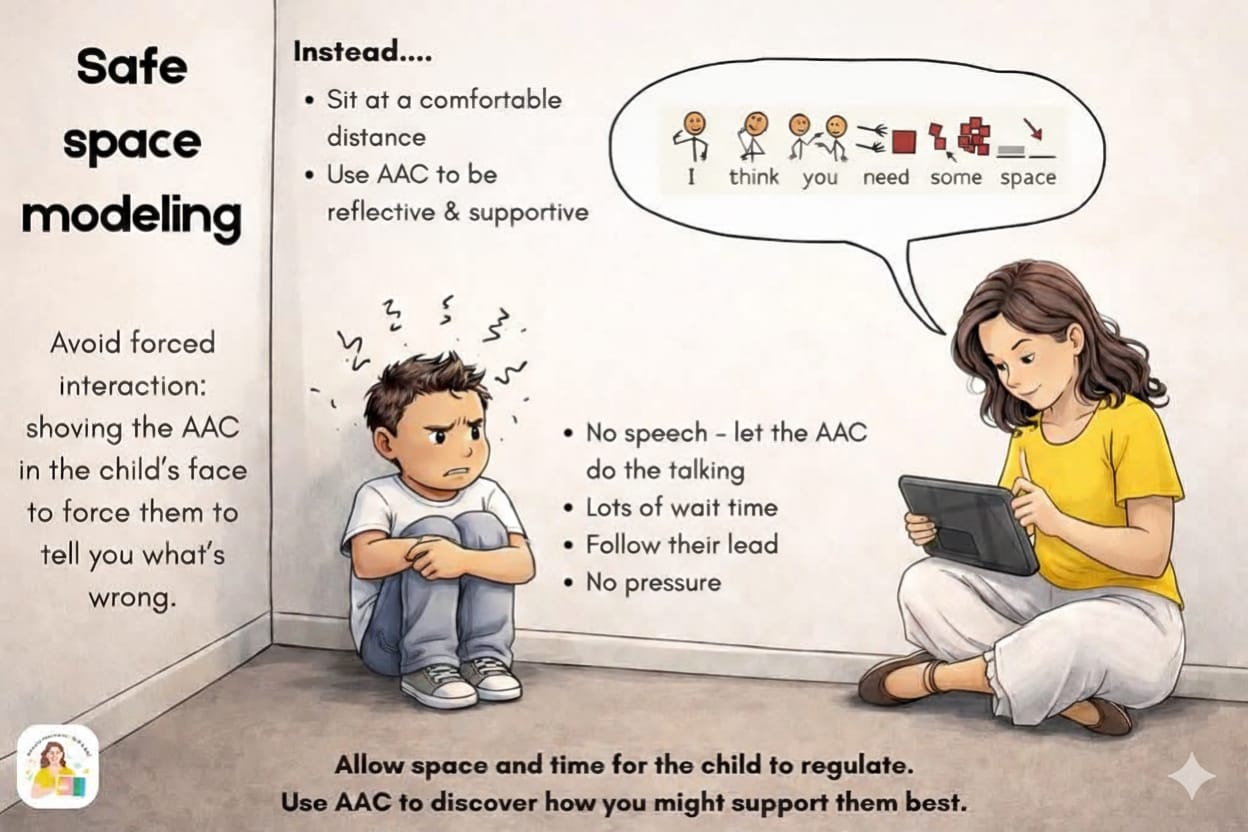
In that moment—without yet fully understanding why the options weren’t working—I chose a different route. I stopped directing and started observing.
I noticed a gap in Arthur’s rhythmic sequence. Based on the pattern, the missing piece was likely a circular peg—either red or blue. Drawing on strategies I learned from Kate McLaughlin (The AAC Coach), I began thinking aloud:
“I see the pattern. I think it’s a circular peg. I wonder if it’s the red one or the blue one. I’m going to check upstairs and bring it down.”
The shift in the room was immediate.
By narrating my thinking, I wasn’t testing him. I was showing him that I understood the internal logic of his system—that it made sense to me.
I found the red peg behind the ball pit in his playroom. I brought both the red and blue pegs back with me, removing the pressure of a single “right” answer.
Restoration and Punctuation
Once the peg was returned, Arthur’s system settled. The pattern was whole again. He took the shoe stick—his bridge to me—and placed it back in its usual basket.
I then modelled language on his AAC device, thinking aloud as I navigated:
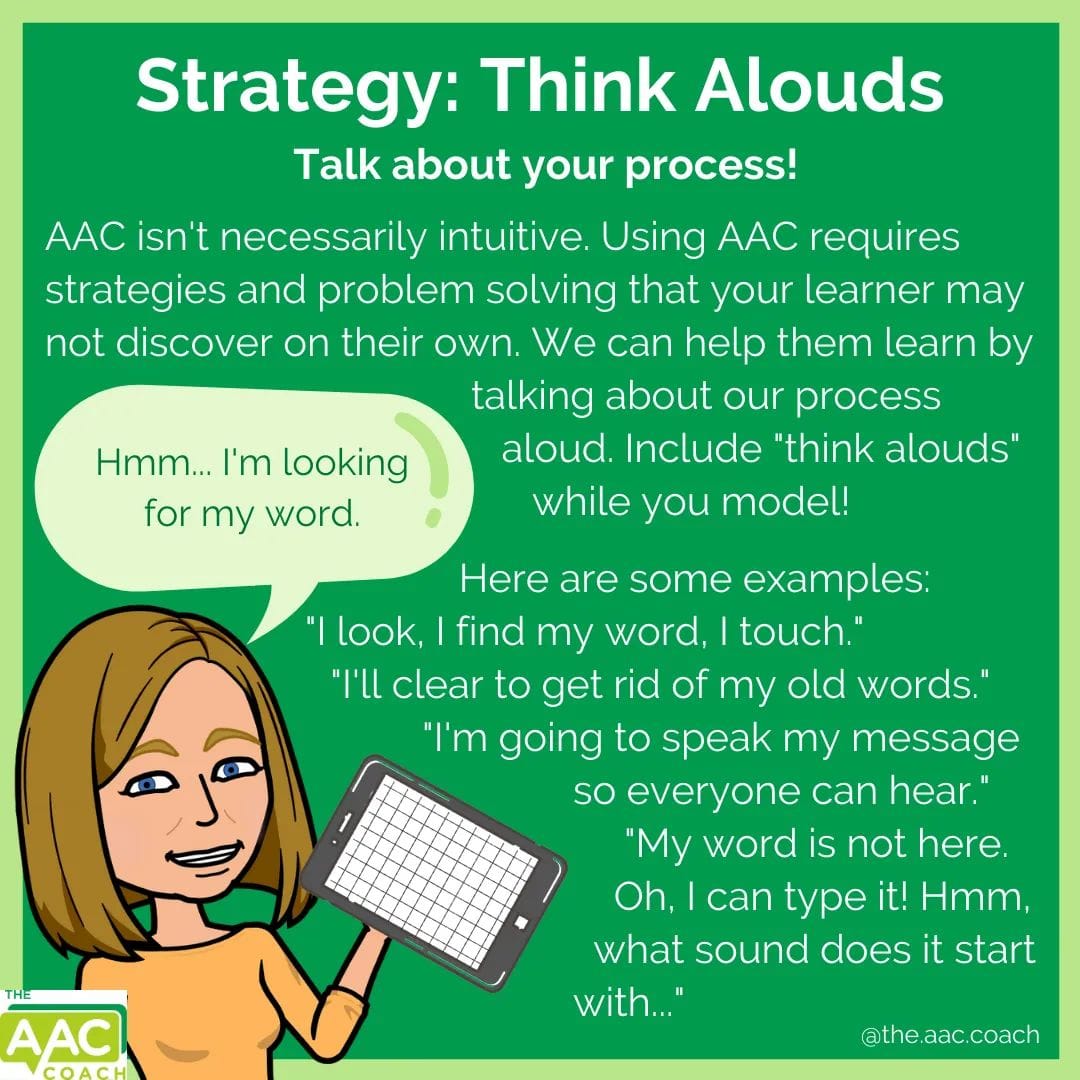
- I go to the Colour folder to say RED.
- Then I open the Shapes folder and long-press circle to explore related word forms, and choose CIRCULAR.
- I notice that the word "peg" isn’t available in CoughDrop vocabulary, so I will type it using the native keyboard.
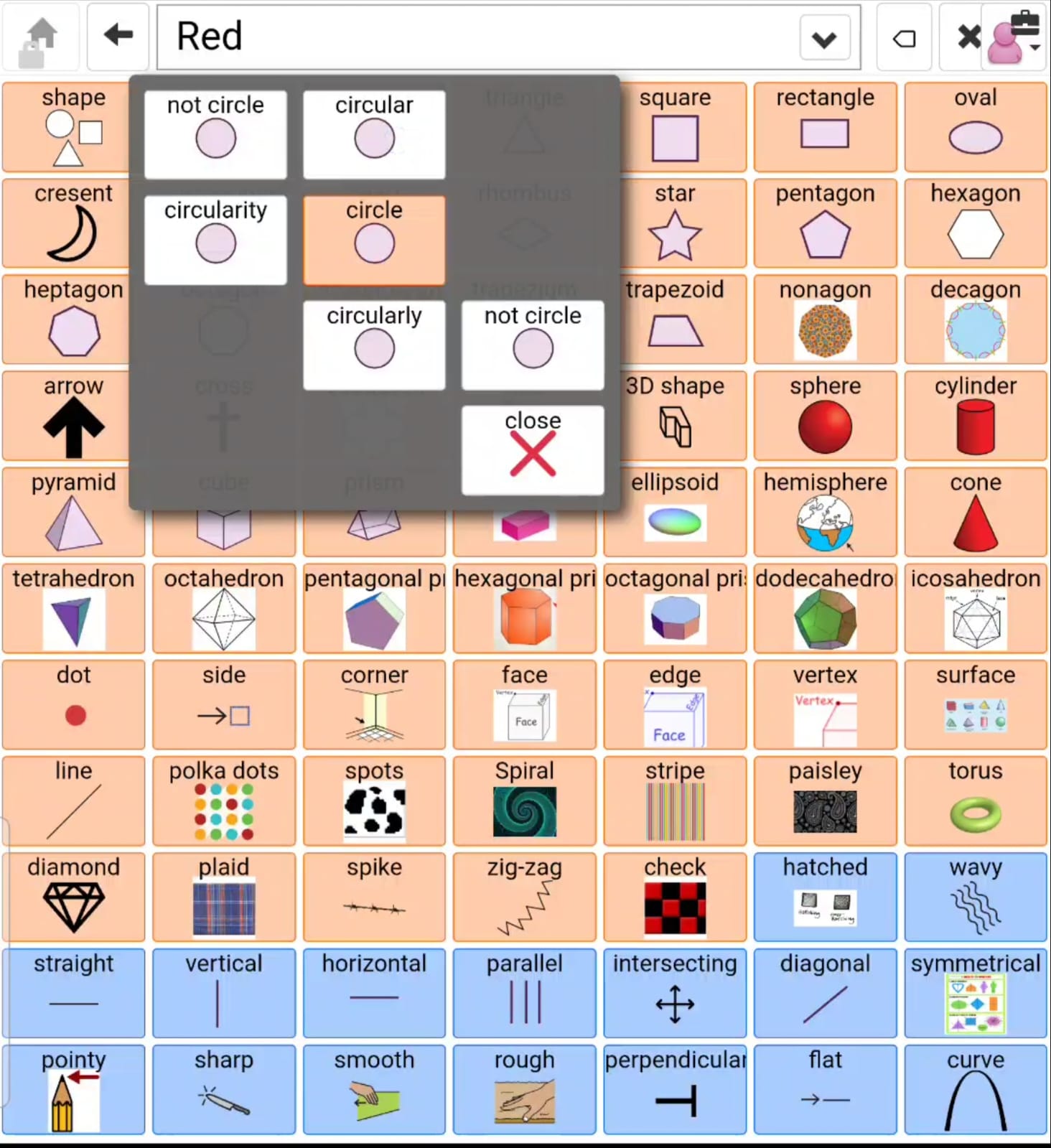
I wasn’t asking him to respond. I was simply offering a map for future reference.
I thought aloud about whether he might want me to add the word to his device.
He listened.
Then he walked over and cleared the screen.
That was his punctuation. The message was complete.
His choice to stay present—and to close the interaction on his own terms—was itself a meaningful AAC moment.
The Post-Incident Reflection: Why It Worked
It was only later, while reflecting with my psychotherapist, that I fully understood why my initial "help" had backfired.
For a PDA neurotype, even a "choice" can feel like a demand for a response. When I offered the AAC folder or the pointing option, the expectation that he must respond was still there—and for his nervous system, that expectation itself was the pressure.

Thinking aloud was the key because it does three things at once:
- It validates the person’s internal order.
- It communicates partnership rather than control.
- It offers language without requiring a response.
A Long-Standing Barrier I Carry
There’s another layer I need to name.
I’ve always struggled with searching for lost objects due to visual processing difficulties. I didn’t have language for this as a child. Instead, I was labeled lazy or accused of making excuses. I was mocked—told things like:
“Aankh hai ki aloo?” or “Aankh hai ki button?”
(Do you have eyes, or potatoes/buttons?)
That history lives in my body. So when Arthur asks me to find something, it isn’t a neutral task. It carries old shame, panic, and a sense of inadequacy.
Naming this has helped me approach both his needs and my own with more compassion. Just as Arthur’s nervous system signals his need for order and agency, my own nervous system signals when tasks exceed my threshold—naming this allows both of us to navigate the moment without judgment.
Autonomy as Regulation
In therapy, something important clicked: the neuroaffirming path forward wasn’t more prompting, but shared power.
My therapist helped me shape language I plan to use next time:
“I want to help, but I’m stuck. You can give me a clue now, or I can keep looking on my own, which might take longer.”
The choice stays with Arthur.
The relationship stays intact.
Practical Takeaways
- Notice the difference between help and directives: Even well-intentioned offers can feel like demands if they require an immediate response.
- Narrate your process: Thinking aloud lowers stakes and builds shared understanding.
- Model without expectation: Offer the map without insisting someone follow it.
- Honour agency as regulation: Letting the person guide the pace or signal completion supports their nervous system without adding demand.
- Check your own baggage: Past shame can quietly turn simple tasks into high-pressure moments.

.png)