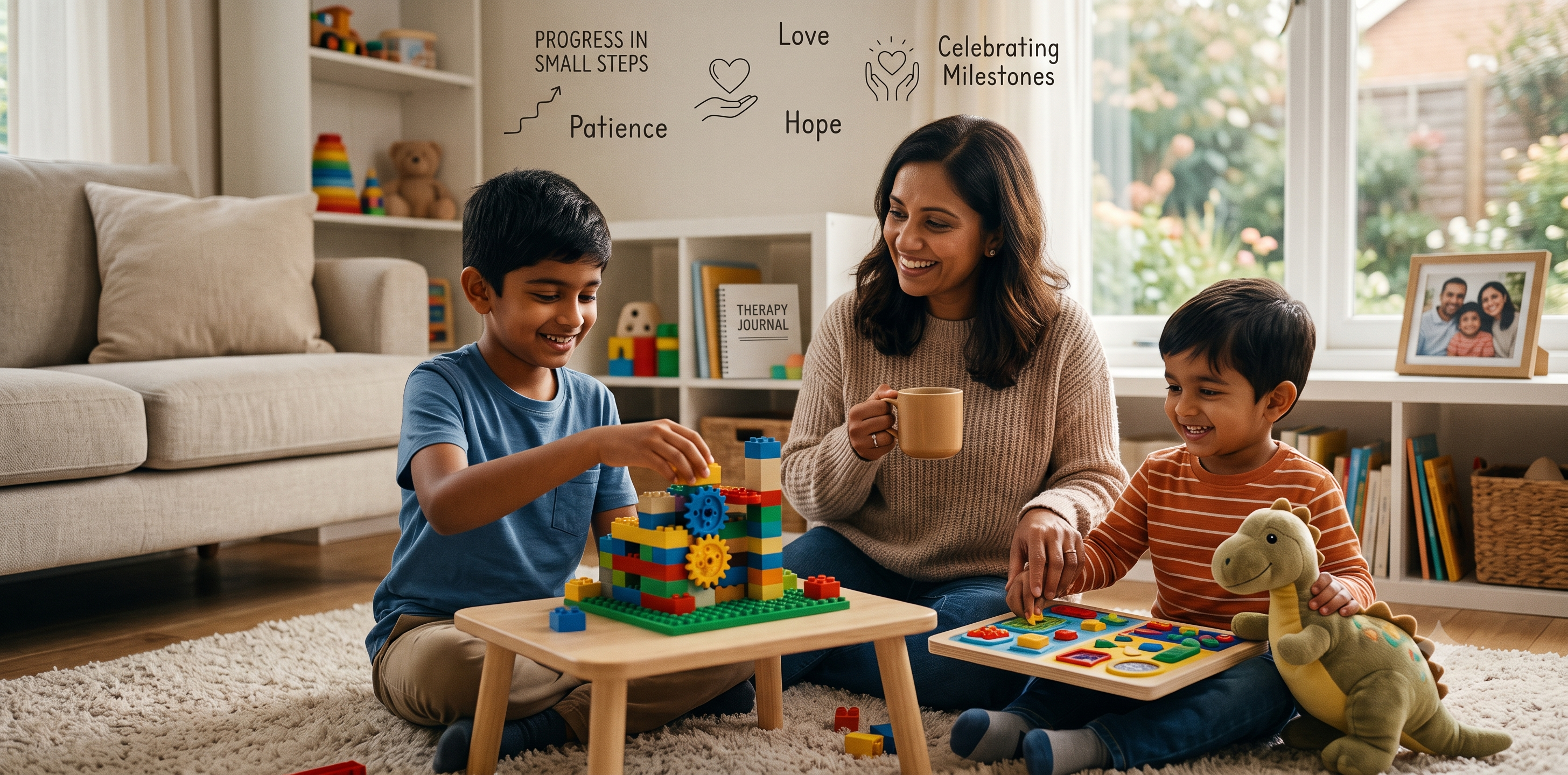

When a child is referred for therapy, parents often begin a journey they never expected. Along with appointments and assessments come countless emotions—hope, uncertainty, determination, and sometimes fear.
As a mother of two autistic children, I understand those feelings well.
My older son, Dhakshin, is 9 years old and has high-functioning autism. His journey has included challenges with fine motor skills, social communication, and understanding social cues. My younger son, Nilan, is 4 years old and has moderate autism. Although both my children are on the autism spectrum, their strengths, challenges, personalities, and pace of learning are completely different.
Living through two very different therapy journeys has taught me that there is no single path to progress.
Every Child Has Their Own Timeline
One of the first lessons I learned was to let go of comparison.
It is natural to look around a therapy waiting room and wonder why another child seems to be progressing faster. But every child starts from a different place and develops different skills at different times.
A milestone that comes easily for one child may require months of practice for another.
Progress is meaningful, no matter how long it takes.
Small Steps Matter
Many people imagine progress as something dramatic—a child suddenly speaking in sentences or mastering a new skill overnight.
In reality, progress is often much quieter.
It may be a child sitting for an activity a little longer than before, attempting a new sound, following a simple instruction, or trying something they previously avoided.
These moments may seem small to others, but they represent countless hours of learning, patience, encouragement, and teamwork.
Recognizing these small victories helps parents stay motivated and reminds us that growth is happening, even when it feels slow.
Therapy Is a Partnership
Therapy sessions are only one part of a child's learning journey.
The greatest progress often happens when therapists and families work together. Therapists bring professional expertise, while parents bring a deep understanding of their child's personality, interests, and daily routines.
Open communication, consistency, and trust create a strong foundation that benefits the child.
Parents do not need to become therapists. Simply creating opportunities for children to practice new skills during everyday routines can make a meaningful difference.
Be Kind to Yourself
Parents often carry an invisible weight.
We question whether we are doing enough, whether we made the right decisions, and what the future will look like for our children.
Over time, I have learned that these feelings are common.
What children need most is not a perfect parent—they need someone who continues to show up with patience, love, and hope, even on the difficult days.
Looking Ahead
Today, I see two very different children following two very different paths.
The goals for each of them are not identical, and neither are the challenges they face. Yet one thing remains the same: every step forward deserves to be celebrated.
Therapy is not about changing who our children are. It is about helping them build communication, confidence, independence, and the skills they need to participate more fully in the world around them.
To every parent beginning this journey, remember that progress is rarely measured by giant leaps. More often, it is built through hundreds of small moments that gradually become meaningful milestones.
Trust the process. Celebrate every achievement, no matter how small. And remember—you are not walking this journey alone.
.png)