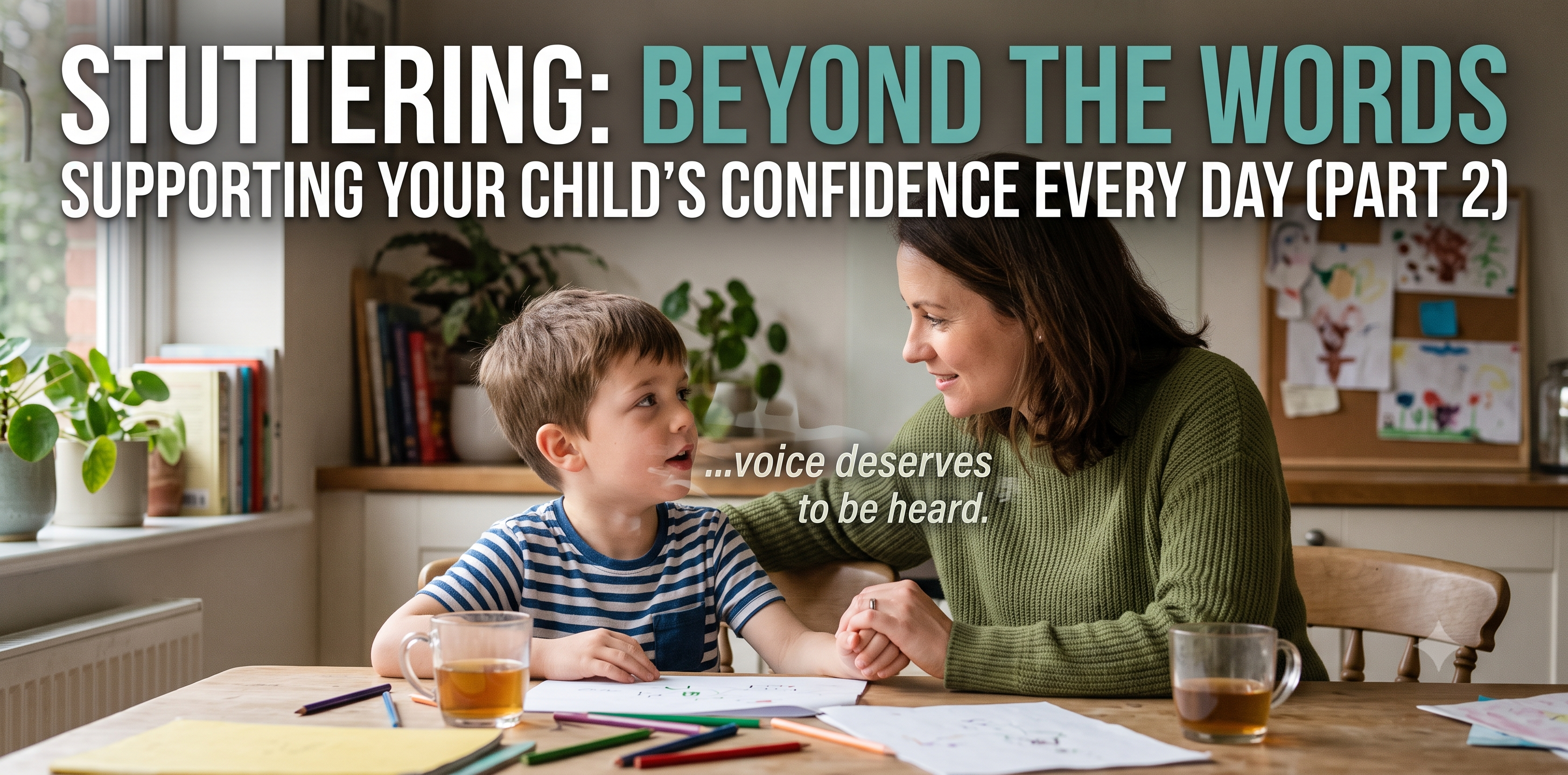

One of the biggest misconceptions about stuttering is that it is only about speech.
It isn't. Stuttering can affect how a child feels about themselves, how they participate in conversations, and sometimes even how they see their own abilities.This is why supporting a child who stutters goes far beyond helping them produce smoother speech. It is about helping them believe that their voice deserves to be heard.
When Children Become Aware of Their Stuttering
Many young children are not bothered by their stutter in the beginning. As they grow older, they may start noticing that speaking feels different for them.
They may realise that some words are "hard."
They may notice classmates finishing their sentences.
They may hear someone laugh or imitate the way they speak.
Sometimes, children don't openly tell us these experiences.
Instead, they may:
- stop raising their hand in class
- answer with only one or two words
- avoid talking to unfamiliar people
- say "I don't know" even when they know the answer
- let others speak for them
These behaviours are not signs of laziness or a lack of confidence.
Often, they are ways of protecting themselves from difficult speaking situations.
The Emotional Side of Stuttering
Imagine knowing exactly what you want to say but worrying about whether the words will come out. Imagine wanting to tell a funny story but wondering if someone will interrupt you before you finish. Many children who stutter experience frustration from time to time.
Some may also experience embarrassment, anxiety, or disappointment. These feelings are real. Rather than saying, "Don't worry"or "It's okay." Try acknowledging their experience. You could simply say, "I know that was difficult" or"I could see you were trying really hard." Feeling understood often helps more than trying to make the feeling disappear.
What About School?
School is where children spend a large part of their day, so teachers play an important role in creating a supportive communication environment. Simple changes can make a big difference.For example:
- Allow extra time for responses.
- Avoid asking the child to "start again."
- Do not finish the child's sentences.
- Focus on the content of what they are saying.
- Encourage participation without forcing it.
A child who stutters should never be excluded from classroom discussions, presentations, or reading activities simply because their speech is different.
Every child deserves opportunities to participate.
Should We Talk About Stuttering?
Many parents worry that mentioning stuttering will make it worse.
Research tells us otherwise. Talking openly and respectfully about stuttering often reduces fear and shame. If your child brings it up, it is okay to have an honest conversation.You do not need to have all the answers.
Sometimes saying,
"Everyone speaks differently, and this is one way your speech works." is enough.
Open conversations teach children that stuttering is not something to hide.
Can Children Who Stutter Be Successful?
Absolutely.
Stuttering does not limit intelligence, creativity, kindness, leadership, or potential. Throughout history, many successful people have stuttered. Some became actors, some became scientists, some became lawyers, athletes, teachers, entrepreneurs, and public speakers.
Their success did not come from waiting until they spoke perfectly.It came from continuing to use their voice. Every child deserves that same opportunity.
How Family and Friends Can Help
Children learn how to feel about their stuttering by watching the people around them. When family members remain patient, accepting, and calm, children often develop healthier attitudes towards communication.
- Celebrate conversations at the dinner table.
- Listen without rushing.
- Laugh together.
- Allow everyone equal time to speak.
- These small moments build communication confidence every single day.
Progress Does Not Always Look Like Fluency
Sometimes progress looks like this:
- A child raises their hand in class for the first time.
- They order their own meal at a restaurant.
- They introduce themselves to someone new.
- They tell a story without giving up halfway.
- They continue speaking even after a moment of stuttering.
- These are victories worth celebrating.
- Fluency is only one part of communication.
- Confidence, participation, resilience, and self-acceptance matter just as much.
A Final Thought
As parents, it is natural to want to protect your child from every struggle. But your child does not need a world where they never stutter. They need a world where they know they will be listened to with patience, respect, and kindness. The greatest gift you can give your child is not the promise of perfect speech. It is the confidence that their ideas, their feelings, and their voice will always matter. Because every child has a story worth telling. And every child deserves people who are willing to listen.

.png)