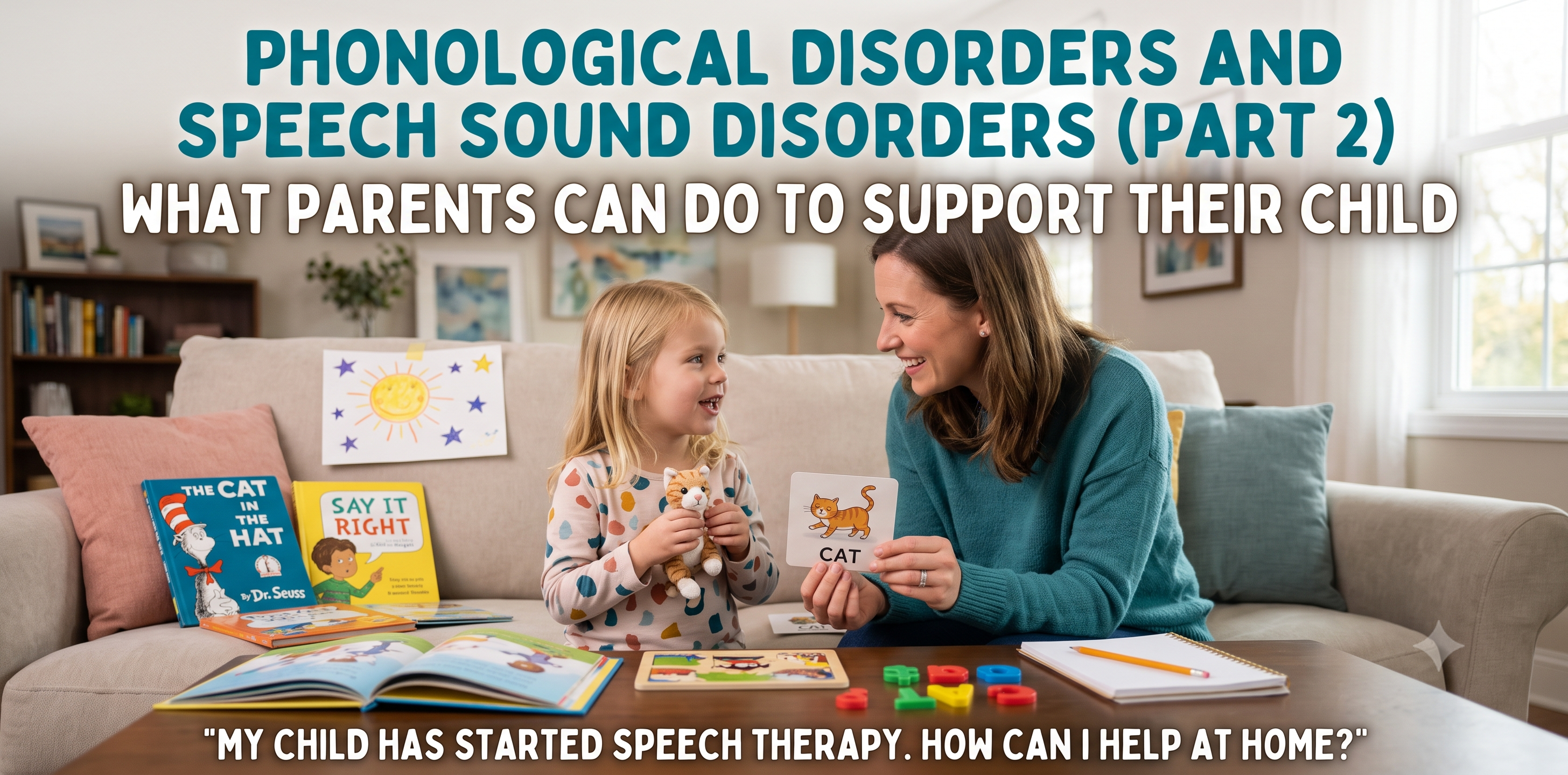

"My child has started speech therapy. How can I help at home?"
After learning that your child has a phonological disorder or another speech sound disorder, it is natural to have many questions. Parents often wonder whether they should correct every mistake, practise for hours every day, or simply wait for therapy to work.
The good news is that speech therapy does not stop when your child leaves the clinic. Parents play one of the most important roles in helping children develop clear and confident communication. Small, consistent efforts at home often make a significant difference.
Myth 1: "My Child Will Eventually Grow Out of It"
One of the most common misconceptions is that every speech problem disappears with age.
While many young children naturally outgrow developmental speech errors, persistent phonological disorders usually require intervention. If speech patterns continue beyond the expected developmental age, waiting too long may allow these errors to become more established.
Early intervention is not about rushing a child. It is about providing support during the years when speech and language are developing most rapidly.
Myth 2: "I Should Correct Every Word My Child Says"
Many parents worry that if they do not constantly correct their child's speech, the errors will become permanent.
In reality, repeatedly asking a child to "Say it properly" or "Try again" can sometimes increase frustration and reduce confidence.
Instead, model the correct word naturally.
For example:
Child: "I see a tat."
Parent: "Yes, that's a cat. The cat is sleeping."
This gives the child a correct model without making them feel criticised.
Myth 3: "Speech Therapy Means Practising Sounds Over and Over"
Speech therapy involves much more than repeating sounds.
A Speech-Language Pathologist carefully selects therapy activities based on your child's specific speech profile. Sessions often include games, storytelling, play-based activities, picture cards, and conversation practice that help children learn how sounds work within words and sentences.
The goal is not simply producing one sound correctly in the clinic but using it naturally during everyday communication.
How Parents Can Support Speech Development at Home
Parents do not need to become speech therapists. Instead, creating a language-rich environment can greatly support progress.
Some simple strategies include:
- Read books together every day.
- Encourage conversations during meals, play, and daily routines.
- Listen patiently without interrupting.
- Repeat your child's message using the correct pronunciation.
- Celebrate successful communication rather than focusing only on mistakes.
- Complete any home practice suggested by your Speech-Language Pathologist.
Even five to ten minutes of enjoyable practice each day is often more effective than long practice sessions once a week.
What Progress Usually Looks Like
Parents sometimes expect speech to improve quickly after starting therapy. However, speech development is usually gradual.
Many children first learn a new sound during structured activities.
Then they begin using it in single words.
Next, they use it in short phrases and sentences.
Finally, they start using it consistently during everyday conversations.
This process is called generalisation, and it is one of the most important goals of speech therapy.
Children may occasionally return to old speech patterns when they are tired, excited, or speaking quickly. This is a normal part of learning and does not mean therapy is unsuccessful.
Can Phonological Disorders Affect Reading and Spelling?
Speech development and literacy are closely connected.
Children who have persistent phonological difficulties may also experience challenges with:
- Learning letter-sound relationships
- Spelling unfamiliar words
- Phonological awareness skills, such as identifying rhyming words or breaking words into sounds
- Early reading development
This does not mean every child with a phonological disorder will develop reading difficulties. However, monitoring literacy skills and providing early support when needed can reduce future academic challenges.
The Emotional Side of Speech Difficulties
Speech disorders affect more than pronunciation.
Some children become frustrated when they are asked to repeat themselves multiple times. Others may avoid speaking in class, become quieter around unfamiliar people, or lose confidence during conversations.
Parents can make a tremendous difference by focusing on what their child is communicating rather than how perfectly they are saying it.
When children feel listened to and understood, they are often more willing to practise and participate in communication.
Every Child's Journey Is Different
It is easy to compare your child with classmates, cousins, or siblings. However, speech development is not identical for every child.
Some children respond rapidly to therapy, while others require more time and repeated practice. Progress depends on many factors, including the type of speech disorder, the child's age, consistency of therapy, home practice, and individual learning style.
The goal is not perfection overnight. It is steady progress toward clearer and more effective communication.
Looking Beyond the Speech Errors
Children with phonological disorders are creative, curious, intelligent, and capable. Their speech difficulties do not define who they are or what they can achieve.
With the right support, encouragement, and evidence-based intervention, most children make meaningful progress. As speech becomes clearer, many also gain confidence in expressing their thoughts, participating in school, building friendships, and engaging with the world around them.
To Conclude
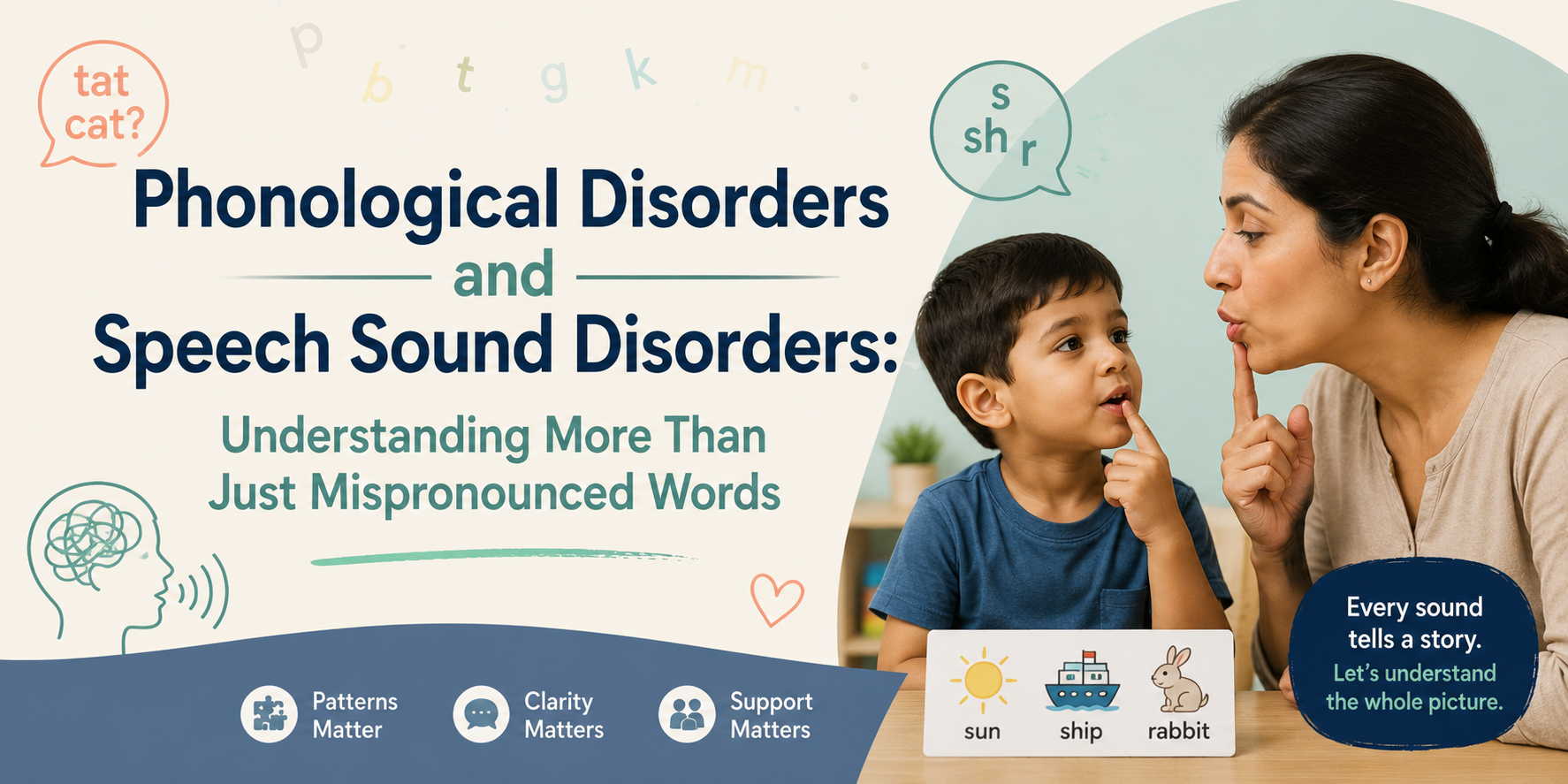
A phonological disorder is not simply about saying sounds incorrectly. It is about learning the sound system of a language, and like any other skill, it can be taught with patience, consistency, and the right guidance.
As parents, your role is not to fix every speech error but to create an environment where your child feels safe to communicate, practise, and grow. Celebrate small successes, trust the therapy process, and remember that progress often comes one sound, one word, and one conversation at a time.
Every child deserves the opportunity to be heard, understood, and confident in their own voice. With early support and collaborative care between families and Speech-Language Pathologists, that goal is well within reach.
References
Rodgers, L., Harding, S., Rees, R., & Clarke, M. T. (2022). Interventions for pre-school children with co-occurring phonological speech sound disorder and expressive language difficulties: A scoping review. International Journal of Language & Communication Disorders, 57(4), 700–716. https://doi.org/10.1111/1460-6984.12719
Walquist-Sørli, L., Caglar-Ryeng, Ø., Furnes, B., Nergård-Nilssen, T., Donolato, E., & Melby-Lervåg, M. (2025). Are speech sound difficulties risk factors for difficulties in language and reading skills? A systematic review and meta-analysis. Journal of Speech, Language, and Hearing Research, 68(1), 164–177. https://doi.org/10.1044/2024_JSLHR-24-00170
Nabila, C. N. M., Putri, F. P., & Iswinarti. (2024). Speech sound disorders in early childhood and their impact on pre-literacy and literacy skills: A systematic review. Journal of Scientific Research, Education, and Technology, 3(4), 1743–1755. https://doi.org/10.58526/jsret.v3i4.590
Laasonen, M., et al. (2026). Intervention effects on phonological processing in children with developmental speech and/or language disorder: A systematic review and meta-analysis of studies with group design. International Journal of Language & Communication Disorders. Advance online publication. https://doi.org/10.1111/1460-6984.70252
American Speech-Language-Hearing Association. (2024). Practice Portal: Speech Sound Disorders—Articulation and Phonology. https://www.asha.org/practice-portal/clinical-topics/articulation-and-phonology/
.png)